

Introduction: Why Indeed Remains the Top Platform for Sales Job Seekers
You sit down at your computer, ready to find your next sales role. You type "indeed jobs" into the search bar and boom. Thousands of listings appear.

That is the power of the indeed job search website. It pulls sales openings from company career pages, other job boards, and staffing agencies all into one place. Instead of hopping between ten different sites, you have a one-stop shop.
But here is the thing. Finding a sales job on Indeed is not just about seeing a big number of results. Sure, you might see over 4,000 sales jobs in a city like San Antonio, Texas. That sounds great. But sales professionals like you face some unique challenges. You might be looking for roles with a commission-based pay structure. Or you want a remote sales position that lets you work from anywhere. Maybe you need a B2B role that matches your specific experience. A basic keyword search often misses the mark on these details.
That is where this guide comes in. We are going to give you a proven, step-by-step framework. It will transform your time on the indeed: job search platform from passive scrolling into active, targeted job landings. You will learn exactly how to use Indeed to find the sales roles that fit your goals.
Next up: We will dive into setting up your Indeed profile to get noticed by recruiters. But first, if you want to build a smarter job search strategy from the ground up, check out our guide on how to land sales jobs in 2026 with a curated job lot method. It helps you focus your time on the best opportunities.
1. Optimize Your Indeed Profile for Sales Recruiters
Here is the thing about the job search engine Indeed. Recruiters are not just waiting for you to apply. They are actively searching for candidates. A complete, keyword-rich profile is how you show up in those searches.
Without it, you are invisible.
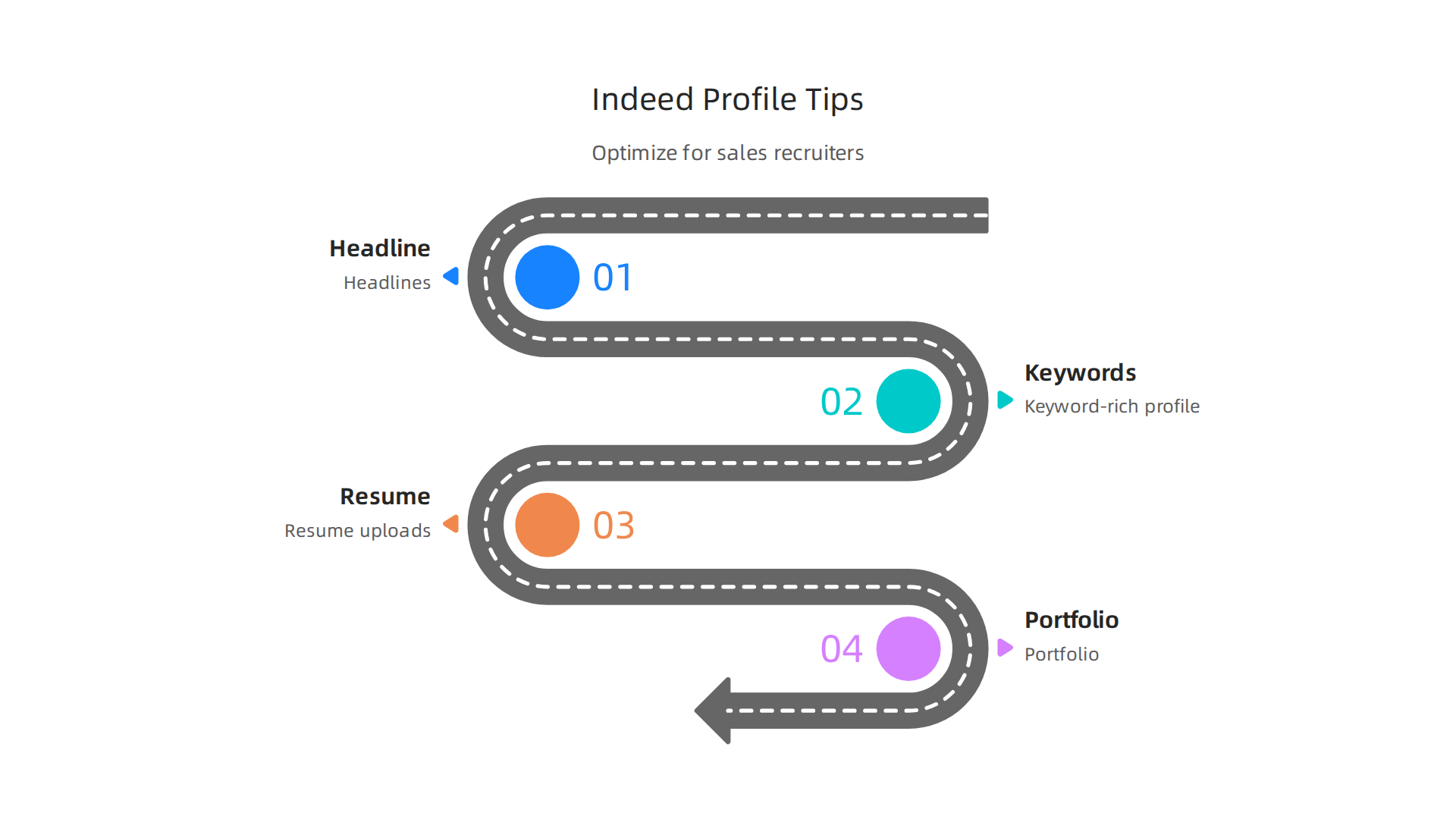
Start by filling out every section. Your professional headline is the first thing a recruiter sees. Do not just write "Salesperson." Write something like "B2B Sales Professional | Cold Calling & CRM Expert | 5 Years Closing Experience." This simple change helps you match common Indeed search filters. According to Indeed’s own advice, a refreshed online profile can change your job search in 2026. Make sure your summary tells your story in a few sentences. Highlight your biggest wins.
Now, sprinkle in the right sales keywords. Words like "B2B," "cold calling," "CRM," and "closing" are exactly what recruiters type into the search bar. Indeed’s career guide lists over 70 sales keywords you should include on your resume. Use them in your profile, too. This helps the job search engine Indeed match you with the right roles. Do not stuff keywords. Use them naturally where they fit.
Finally, upload a tailored resume and link your portfolio. Upload a resume specifically for sales roles. Do not use a generic one. And add links to your LinkedIn profile or personal website. This builds credibility and lets recruiters see your full story.
Indeed’s best sales resume examples show that quantifying your experience (like "exceeded quota by 20% each quarter") makes a big difference.
For more personalized help with your profile and job search, read our guide on how a careers advisor helps you land sales jobs faster in 2026. It covers the same strategies recruiters teach their clients.
This one section can double your chances of getting found. Take 30 minutes today to update it.
2. Master Indeed’s Advanced Search Filters to Find the Best Sales Jobs
A basic search for "sales jobs" can return thousands of results. Most of them will not match what you actually want. That is where the real power of the job search engine Indeed comes in.
Boolean search strings are your secret weapon. These are simple commands that tell the Indeed job search website exactly what to show.
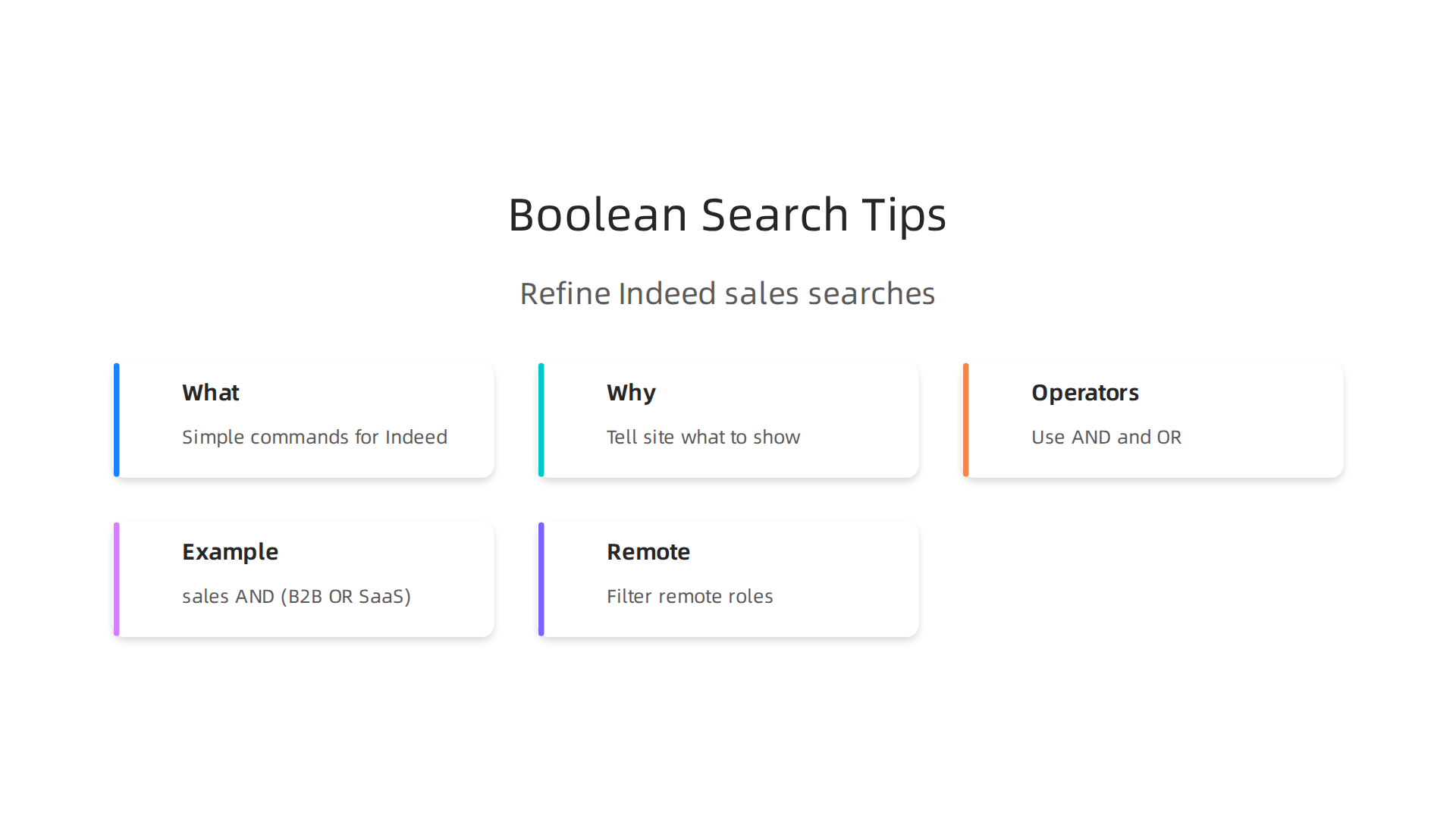
For example, try typing this into the search bar: sales AND (B2B OR SaaS) AND remote. This string tells Indeed to show only jobs that include "sales" and either "B2B" or "SaaS" and "remote." It cuts out all the noise. Indeed’s guide on Boolean search strings explains how recruiters use this same method to find top candidates.
After you run a Boolean search, use the filters on the left side of the page. You can filter by salary, commission structure, and company size. This helps you target roles that match your income goals. If you want roles with high earning potential, filter for commission-based jobs first. For example, commission sales jobs in San Antonio, TX show how many options exist when you narrow your focus.
Location settings are also key. Set your location to "remote" to find work-from-home roles. And use the "exclude" filter to block out job titles you do not want. This saves you time scrolling past irrelevant posts.
For a deeper look at how to use curated search methods to find exactly what you need, read our guide on how to land sales jobs in 2026 with a curated job lot method.
The Indeed: job search website gives you these tools for free. Use them to turn your search from a chore into a precision hunt. You will find better matches in less time.
3. Set Up Smart Job Alerts to Never Miss a Sales Opening
You found the perfect sales job. It matches your Boolean search string. The pay looks great. But when you click apply, it was posted three weeks ago. The company already filled the role.
This happens all the time. The best sales jobs get dozens of applications within hours. By the time you spot them on the Indeed job search website, you might already be too late.
The fix is simple. Set up job alerts as soon as you finish your advanced search. Indeed lets you save your search criteria and get notified when new matching sales jobs appear. This turns your job search engine Indeed into a system that works for you 24/7.
Here is how to make alerts work for you.
First, customize each alert by keyword, location, and how fresh the posting is. After you run a search, click the "Create alert" button. Indeed will remember your exact filters. You can choose to get emails daily or in real time. The Indeed job search help center explains how refining your search with different keywords and phrases helps you get better matches.
Second, do not create just one alert. Create multiple alerts for different sales roles. Set one for "account executive" and another for "sales development rep." Maybe add one for "inside sales" and another for "B2B sales manager." Each alert covers a different part of the market. This way, you never miss a niche opportunity.
Third, adjust the timing based on your search intensity. If you are actively looking, set alerts to "real time" so you get notified the second a job is posted. If you are casually browsing, daily alerts are fine. You can always change this later in your Indeed settings.
Using the Indeed job search website this way means you see new sales jobs before other candidates do. You can apply early. You get your resume in front of hiring managers faster.
Job alerts work great alongside the curated job lot method. Use both together to stay ahead of the competition and fill your pipeline with high quality leads. The key is consistency.
Set up your alerts today. Let Indeed do the heavy lifting while you focus on preparing for interviews.
4. Tailor Your Resume and Cover Letter for Sales Roles
You set up smart job alerts on the Indeed job search website. Now new Indeed jobs show up in your inbox. But here is the thing. If you send a generic resume, you will blend in with everyone else. Sales hiring managers look for specific things. Give them what they want.

First, focus on numbers. Sales is a results driven field. Do not just list your duties. Use action words and back them up with real numbers. For example, instead of "handled client accounts," write "exceeded quota by 30% for four quarters in a row." This kind of quantified achievement stands out. The Indeed career guide on sales resume keywords explains that numbers help prove your performance.
Second, show you understand the sales process and the company you are applying to. Read the job description closely. What type of selling does this role involve? Is it outbound prospecting or account management? Tailor your resume and cover letter to match. For your cover letter, mention something specific about the company’s product or market. The Indeed cover letter guide shows how to format this effectively.
Third, add a "Sales Stack" section to your resume. List the tools you know, like a CRM (Salesforce, HubSpot), dialer software, and LinkedIn Sales Navigator. This proves you can hit the ground running. Many candidates skip this, but it helps you look tech savvy.
Finally, use keywords from the job ad. When you use the same language as the employer, your resume passes through their system and gets in front of a real person. The Indeed resource on sales resume keywords lists over 70 powerful terms you can include.
Getting your resume right takes time, but it pays off. A career advisor can help you polish your materials even further. Learn how a careers advisor helps you land sales jobs faster to give yourself an edge.
Take a few extra minutes to tailor each resume. That small effort could land you your dream sales role.
5. Prepare for Sales-Specific Interview Questions
Your resume is ready, and the Indeed jobs are rolling in. Now comes the part that makes most people nervous: the interview.

Sales interviews are different from other interviews. Hiring managers want to see how you think on your feet, handle pressure, and close a deal.
Common sales interview questions include old favorites like "Sell me this pen." You might also get questions about how you handle rejection or how you describe your closing technique. The Indeed guide to common sales interview questions lists several more you should expect. When you see these questions coming, you can prepare strong answers ahead of time.
Here is the trick that works best for sales interviews. Use the STAR method. STAR stands for Situation, Task, Action, Result.
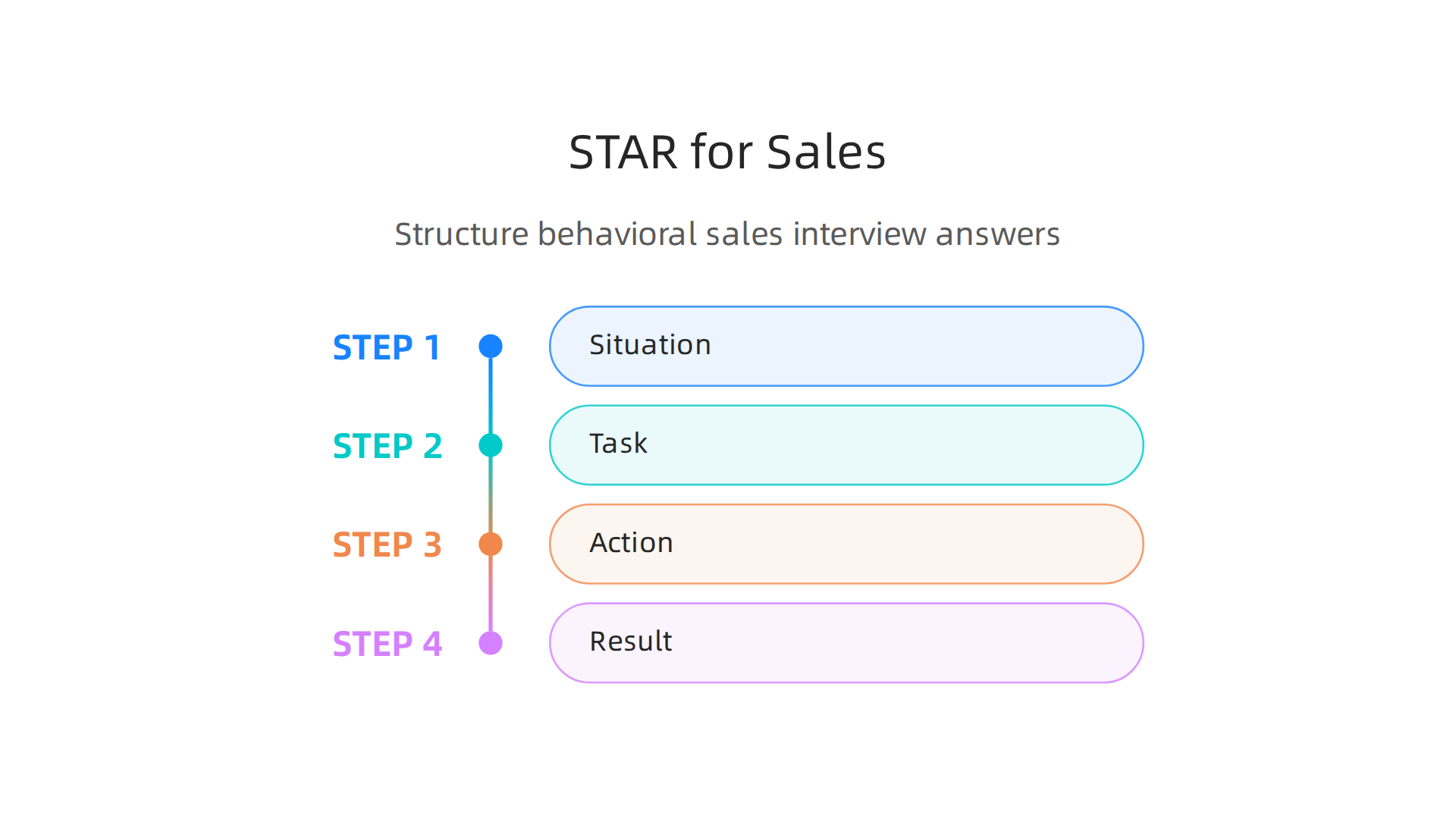
When the interviewer asks about a past experience, you tell a quick story that follows this structure. For example, if they ask about your biggest sales win, you describe the situation, what you needed to do, the specific actions you took, and the result you achieved. The QuotaPath guide on sales interview questions explains why this method works so well. It shows that you are clear, organized, and focused on outcomes.
Another smart move is researching the company’s sales process before you walk in. Do they use a discovery-first approach? Do they focus on demos and proposals? When you mirror their language, you sound like a natural fit. The Apollo.io framework on sales interview questions suggests that in 2026, interviewers also test your familiarity with AI tools and pipeline management.
Pro tip: prepare a few questions to ask the interviewer too. Sales leaders respect curiosity. Ask about their sales cycle, their top performers, or what success looks like in the first 90 days.
Getting the interview is only half the battle. Nailing it is what lands the job. If you want to explore even more strategies for finding the right roles to apply for, check out our guide on how to land sales jobs in 2026 with a curated job lot method.
Practice your answers out loud a few times. It will make a big difference when the real moment comes.
6. Understand and Negotiate Sales Compensation Packages
You nailed the interview. Now comes the part that feels a bit awkward but is super important: talking about money.

Sales compensation is different from regular salaries. If you do not understand how it works, you might leave thousands of dollars on the table.
Here is the first thing to know. Most sales roles use a mix of base pay plus commission. The commission is what you earn when you close deals. Some companies offer a draw, which is like an advance on your future commissions. Others provide a guaranteed ramp, meaning you get a fixed amount for the first few months while you learn the ropes. And watch for accelerators, which pay you more once you hit certain targets. The 2026 sales compensation statistics from Everstage show that top performers often earn much more than their OTE suggests.
Let’s talk about OTE. OTE stands for On-Target Earnings. It combines your base salary plus the commission you would earn if you hit 100% of your quota. Here is the catch. Most reps do not hit 100% every month. The SDR Salary Guide 2026 from Visdum explains that most SDRs earn between 60-80% of their OTE. So do not assume you will get the full number. Always ask about quota attainment rates for the team. Ask how many reps actually hit quota last year. That tells you the real picture.
Now for negotiation. You have room to ask for better terms. Start by asking about the ramp period. How long before you are expected to be at full speed? A good ramp gives you time to build your pipeline without starving. Ask if the commission is uncapped or capped. Uncapped means you can earn as much as you want. Capped means there is a limit. In 2026, many top companies offer uncapped plans to attract the best talent.
Also ask about the split between base and commission. A higher base gives you stability. A lower base with higher commission gives you upside but more risk. Think about your own situation. Do you need steady income right now? Or can you handle the swings?
Here is one more thing. The Indeed guide to common sales interview questions includes questions about compensation expectations. Be ready with a number. Do your research first. Know the median OTE for the role. For SDRs in 2026, that number is around $85,000. For Account Executives, it can be much higher.
If you want to explore more strategies for finding roles that pay well, check out our guide on how to land sales jobs in 2026 with a curated job lot method.
Take your time with this step. Understanding compensation is not greedy. It is smart. You are building a career, not just taking a job.
7. Identify and Close Skill Gaps to Excel in Your Next Sales Role
You have figured out the compensation side. Now make sure you are the candidate hiring managers actually want. The sales world in 2026 has shifted. Employers looking through job search engine indeed need people with a specific mix of abilities.
What are the skills that set top performers apart? According to Apollo’s research on essential sales skills in 2026, employers value AI fluency, analytical thinking, and relational empathy. Only 27% of salespeople feel fully equipped for today’s customers. That means there is a big opportunity for you.
Start with a self-assessment. Ask yourself honestly: How strong is your B2B prospecting? Can you run a consultative selling conversation? Are you comfortable with your CRM and data driven decision making? The Flexa guide to the most in demand sales jobs in 2026 lists commercial acumen, data literacy, relationship building, and adaptability as the most sought after skills.
Once you know your gaps, close them fast. Online courses and certifications work great. HubSpot Sales, Sandler Training, or Salesforce Trailhead can fill holes quickly. Practice with role play. Ask a friend or mentor to run a discovery call with you. The Randstad USA guide to trending sales skills in 2026 emphasizes that hands on practice beats just reading.
One more thing. Use feedback from mentors or even from your indeed job search website interviews to pinpoint exactly what needs work. Every rejection is a clue.
If you want a step by step approach to finding roles that let you practice these skills, check out our guide on how to land sales jobs in 2026 with a curated job lot method.
Take the time now to build those skills. It pays off in confidence and closing rates.
8. Map Your Career Progression: From SDR to VP of Sales
Now that you have closed your skill gaps, it is time to plan your next move. Sales has a clear career ladder. Knowing the rungs helps you pick the right jobs and grow faster.
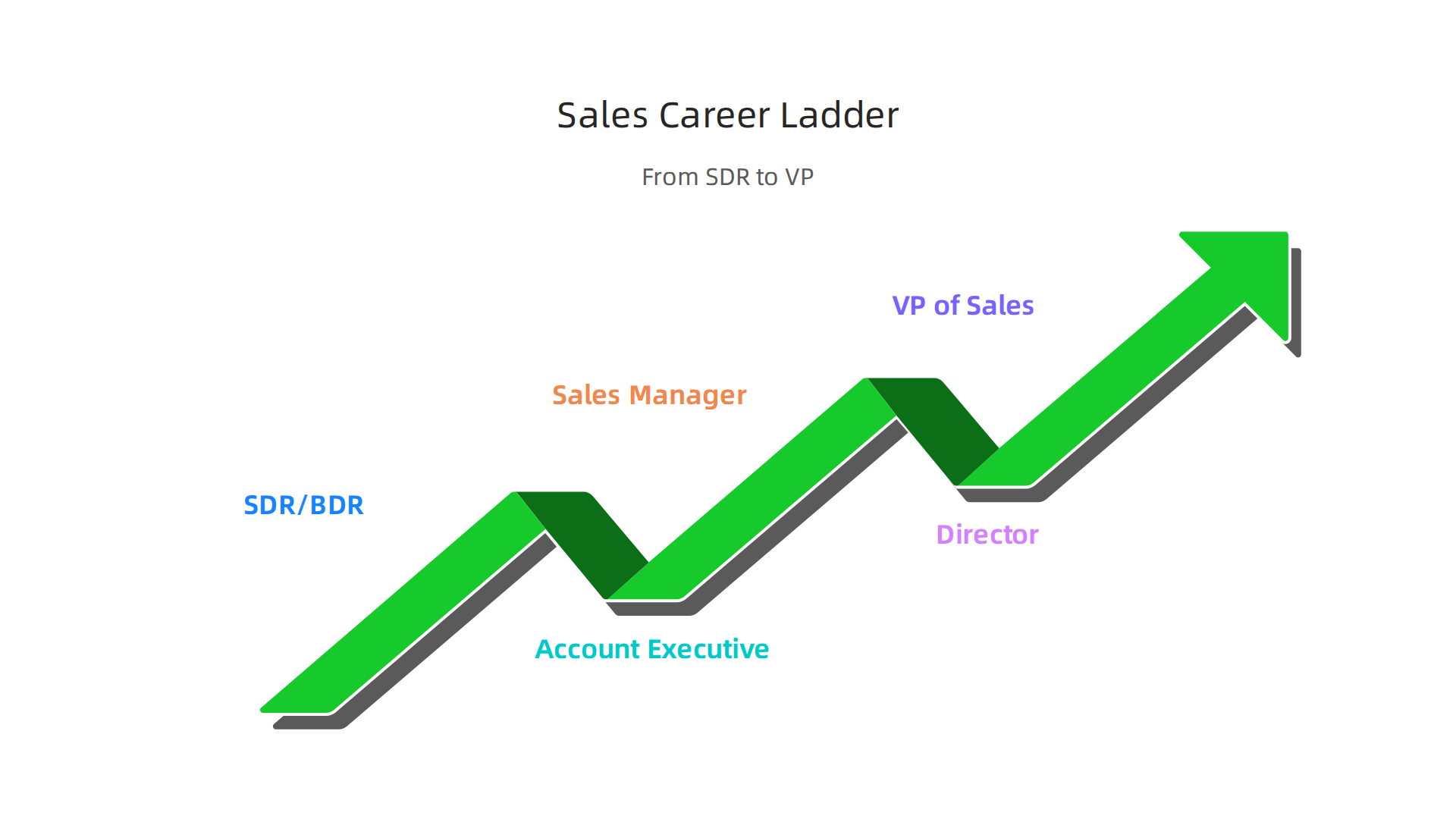
Here is the typical sales career path:
- SDR/BDR (Entry Level): Focus on prospecting and cold outreach. Key skills: resilience and active listening.
- Account Executive (Mid Level): You close deals and manage relationships. Key skills: consultative selling and negotiation.
- Senior Account Executive: You handle complex, high value accounts. Key skills: strategic thinking and commercial acumen.
- Sales Manager: You lead a team of reps. Key skills: coaching, data driven decision making.
- Director of Sales: You set regional or product line strategy. Key skills: leadership and analytical thinking.
- VP of Sales: You run the entire sales organization. Key skills: executive presence and business strategy.
Each step demands new competencies. At entry level, prospecting and resilience matter most. Apollo’s research on essential sales skills in 2026 shows that only 27% of salespeople feel fully equipped for today’s customers. That gap grows as you move up. The Flexa guide to the most in demand sales jobs in 2026 lists commercial acumen and data literacy as must haves for mid and senior roles. And the Randstad USA guide to trending sales skills in 2026 emphasizes adaptability and relationship building for leadership positions.
How do you find roles that match your next step? Use the job search engine Indeed to look for positions with clear growth paths. Search for "Indeed jobs" with titles like "Senior Account Executive" or "Sales Manager". Many companies on the Indeed job search website now include promotion data in their job postings. If you live in a big city, try searching "Indeed jobs London" to find local roles that offer training and advancement.
Read the job descriptions carefully. Look for language like "career progression" or "promotion within 12 months". That tells you the company invests in your growth.
For a complete strategy on finding these roles, check out our guide on how to land sales jobs in 2026 with a curated job lot method.
Take the time to map your path. Know where you want to be in three years. Then pick every role as a stepping stone. Your career will thank you.
Summary
This guide shows sales professionals how to use Indeed as a precision tool—not just a list of openings—to find roles that match their goals. It explains how to optimize your Indeed profile with the right keywords, leverage Boolean search and advanced filters, and set real-time job alerts so you beat other applicants to high-value postings. You’ll learn how to tailor resumes and cover letters with quantified results and a clear