

Introduction: Navigating the Pittsburgh Medical Sales Job Market
Looking for medical sales jobs in Pittsburgh, PA, can feel like standing at a busy intersection. You see signs of opportunity everywhere, but knowing which way to turn is the real challenge. You’re in the right place.
Pittsburgh isn’t just a city with great sports teams and bridges. It’s a major healthcare and life sciences hub.

This creates a dynamic and growing market for medical sales professionals. The pharmaceutical manufacturing sector alone contributes nearly $8 billion to the local economy, supporting a vast network of jobs and vendors. On a national scale, health care is projected to be the fastest-growing industry sector in 2026. For someone in sales, this means one thing: demand.
But here’s the thing. A booming market doesn’t mean finding the right role is easy. Job seekers in the Pittsburgh area face specific local challenges. How do you find those niche roles with innovative biotech firms? What is a realistic salary expectation when selling medical devices in Allegheny County compared to pharmaceuticals? Reports indicate that regions like Pittsburgh are facing a serious workforce shortfall, making strategic job searching even more critical.
Whether you’re looking for full time jobs with major hospital suppliers or flexible part time jobs to build your experience, you need a local guide. You need clear data, insider knowledge on key employers, and an understanding of the regional salary landscape.
This guide is that roadmap. We cut through the noise to give you a data-driven, actionable plan for landing and thriving in a Pittsburgh medical sales job. We’ll cover the top companies hiring right now, decode local salary reports, and provide the strategies you need to stand out. It’s the insider info you wish you had before starting your search.
Ready to stop wondering and start planning your next career move in one of America’s leading healthcare cities? Let’s get started. Just like navigating a complex sale, knowing the local terrain is your first step to success. For more strategies on cracking a specific local market, check out our guide on landing a sales job in Los Angeles.
The Pittsburgh Medical Sales Landscape in 2026
To understand where the best medical sales jobs in Pittsburgh, PA are, you need to know what’s driving the market. In 2026, Pittsburgh isn’t just growing. It’s thriving as a concentrated center for healthcare innovation and delivery.
The foundation is a powerful mix of world-class hospitals and cutting-edge life sciences research. The University of Pittsburgh, for example, is a national leader in health sciences research, creating a constant pipeline of new technologies and treatments that need to be commercialized. Major hospital systems like UPMC and Allegheny Health Network are not just care providers. They are massive purchasers of everything from surgical tools to complex IT systems.
This ecosystem creates specific, high demand specialties for sales reps. If you’re looking for full time jobs with strong earning potential, focus on these areas:
- Orthopedics and Robotics: With an aging population and top-tier surgical centers, sales for joint replacements, surgical robotics, and trauma implants are consistently strong.
- Pharmaceuticals: The sector is a powerhouse, contributing nearly $8 billion to the local economy and supporting a vast network of vendors and jobs. This means opportunities with both big pharma and the specialty pharmacies that serve regional health systems.
- Medical Devices and Equipment: From cardiology to neurology, the daily operation of major hospitals requires a steady supply of advanced devices, diagnostic tools, and durable equipment.
Nationally, health care is projected to be the fastest-growing industry sector in 2026. In the Pittsburgh region, health care and social assistance is already the largest employment sector. This growth creates opportunity, but also a challenge. Reports indicate the Pittsburgh area is facing a serious workforce shortfall. For you, this means companies are actively looking for talent, but they are also being more selective. Standing out with specialized knowledge is key.
Finally, the way you work has changed. Hybrid work models are now standard for many medical sales jobs based in Pittsburgh. While you’ll still need to be local for hospital visits and client meetings, a significant portion of administrative work, internal meetings, and even some client check-ins can be done remotely. This offers better balance and reduces windshield time. Some part time jobs or contractor roles are also embracing this flexible model, perfect for building experience or transitioning into the field.
Understanding this landscape your first strategic advantage. Next, you need to know who’s hiring. For a look at how another major metro area compares, check out our guide on landing a sales job in Los Angeles.
Key Employers and Companies Hiring in Pittsburgh
Now that you see why Pittsburgh is a hotspot for medical sales jobs, let’s talk about who’s actually hiring. Knowing the landscape is one thing. Knowing the specific players is what turns opportunity into an application.
The good news is the range is wide. From global giants to local startups, the ecosystem needs sales talent. Here’s a breakdown of the key employers hiring for medical sales jobs in Pittsburgh, PA right now.
Large Medical Device & Equipment Manufacturers
These are the household names in med-tech, and they maintain significant sales territories and often regional offices in or around Pittsburgh to serve the dense hospital network. They typically look for experienced reps with proven track records.
- Stryker: A dominant force in orthopedics, surgical equipment, and neurotechnology. With Pittsburgh’s strong surgical centers, they are a perennial top employer for device sales.

- Johnson & Johnson (Ethicon, DePuy Synthes): Through its many subsidiaries, J&J covers everything from surgical sutures (Ethicon) to joint reconstruction (DePuy). Their broad portfolio means diverse sales roles.
- Medtronic: A leader in cardiac and vascular devices, surgical robotics, and diabetes care. The presence of major heart institutes in the area makes this a key territory.
- Boston Scientific: Specializes in minimally invasive medical devices, particularly in cardiology and endoscopy. Another major player with consistent demand for specialized sales reps.
- Siemens Healthineers & GE HealthCare: These giants focus on imaging systems (MRI, CT scans), diagnostics, and hospital IT solutions. Sales roles here are often more technical and involve high-value capital equipment.
Pharmaceutical Companies and Biotech Firms
The pharmaceutical sector is a powerhouse here. As noted in an industry report, pharma manufacturing supports hundreds of thousands of jobs and contributes nearly $8 billion to the local economy, which fuels a vast network of sales opportunities. You’ll find both large pharma sales districts and exciting biotech startups.
- Major Pharma (Pfizer, Merck, AbbVie, etc.): While their research labs might be elsewhere, these companies have dedicated sales territories covering Pittsburgh’s hospitals and specialty clinics. Roles often focus on specific therapeutic areas like oncology, immunology, or cardiology.
- Biotech & Specialty Pharma: This is where Pittsburgh’s innovation engine shines. Companies spun out from University of Pittsburgh research or attracted by the life sciences corridor are constantly emerging. These firms often hire sales specialists to launch new, targeted therapies. The national life sciences sector shows strong projected employment growth, and Pittsburgh is a part of that trend.
Local Distributors and Growing Med-Tech Companies
Don’t overlook these companies. They are often the best route for landing entry-level medical sales jobs or for those making a career switch. They offer invaluable hands-on experience.
- Regional Distributors: These companies act as the crucial link between thousands of smaller manufacturers and local hospitals, surgery centers, and clinics. They sell a wide range of products, from consumables to instruments. Sales roles here provide rapid-fire product education and are a classic training ground.
- Small to Midsize Med-Tech Firms: Pittsburgh has a growing community of homegrown medical technology companies. These firms might specialize in a single innovative product, like a new surgical tool or diagnostic software. Sales roles here are often hybrid, wearing multiple hats, and offer a chance to grow with the company.
Remember, the healthcare sector is projected to have the largest job growth of any industry in 2026. But in Pittsburgh, reports also indicate a competitive talent market. Companies are hiring, but they are selective. Your goal is to match your skills and interests with the right type of employer on this list.
Whether you’re aiming for a full time job with a global device maker or a strategic part time role with a local distributor, understanding who these employers are is your first step. To broaden your search strategy, explore our insights on finding sales jobs in different markets.
Essential Skills and Qualifications for Success
You know who’s hiring for medical sales jobs in Pittsburgh, PA. But what does it take to actually get hired and succeed? In a competitive market with top-tier employers, you need more than just a desire to sell. You need a specific blend of timeless sales skills and deep medical knowledge.
Success in 2026 requires a balance of three areas: core sales execution, industry-specific understanding, and the right credentials to get your foot in the door.
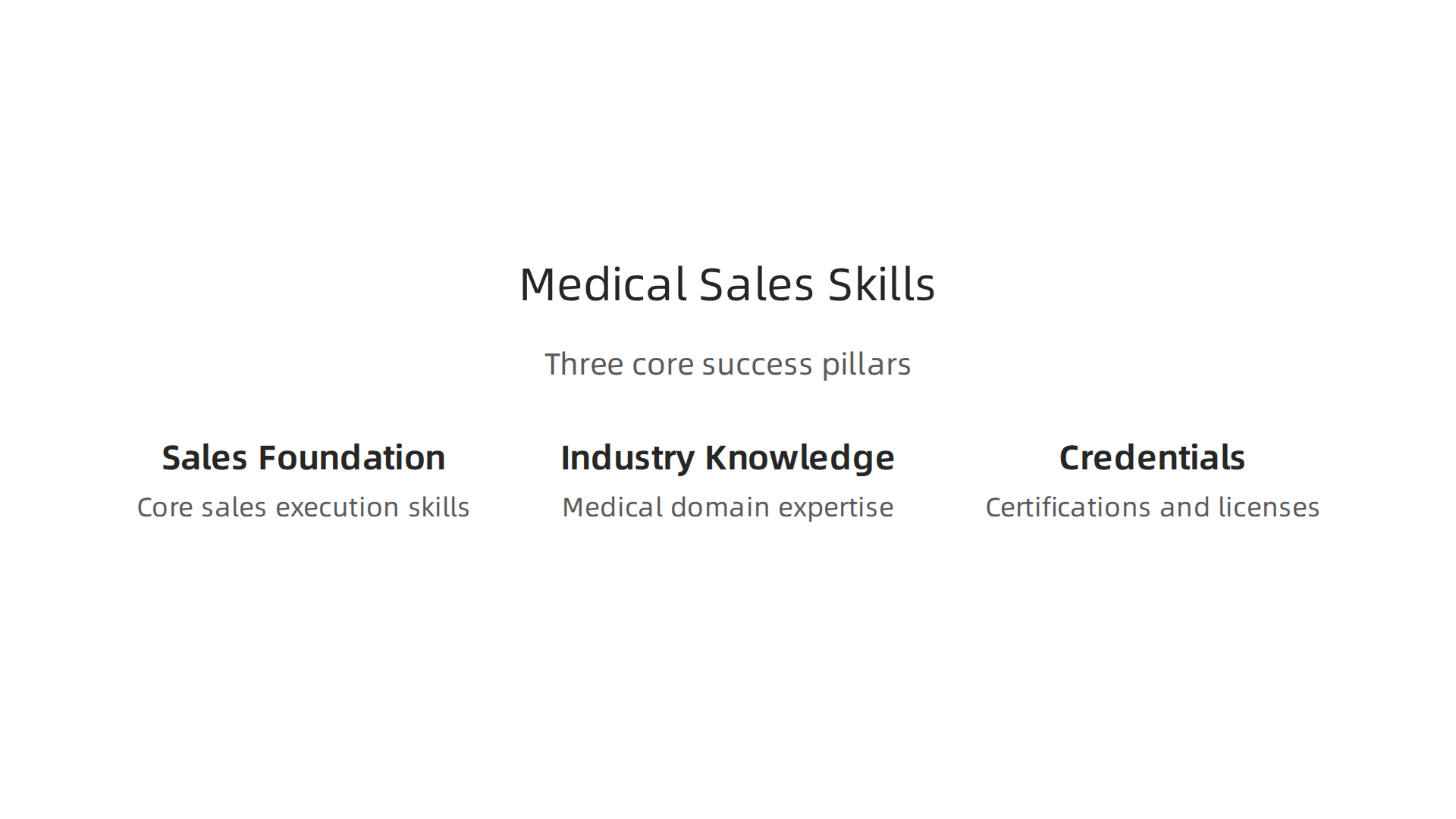
1. The Non-Negotiable Sales Foundation
Every medical sales job, whether a full time job with a device giant or a part time role with a distributor, is built on universal sales competencies. But here, they’re applied in a high-stakes environment.
- Communication is Everything. This is the number-one skill. You must translate complex product benefits into clear patient outcomes for surgeons, nurses, and hospital administrators. As industry experts note, proficient verbal and written communication skills are essential for effectively conveying complex medical information.
- Strategic Prospecting & Relationship Building. Your customers are busy saving lives. You can’t just pitch. You must build trusted, consultative partnerships. This means understanding their challenges, hospital budgets, and patient demographics long before you talk about your product.
- Resilience and Insight. The sale rarely happens in one meeting. Today’s reps need resilience, insight, and strategy, beyond just a winning personality and a polished pitch. You’ll navigate long sales cycles, procurement committees, and competitive displacements.
2. Your Medical and Industry Knowledge
This is what separates medical sales from other fields. You are selling science and outcomes, not just features.
- Clinical Fluency. You don’t need to be a doctor, but you must speak the language. For a joint replacement device, you need basic anatomy. For a cardiac stent, you need to understand pathophysiology. This clinical fluency allows you to have credible conversations in the operating room or clinic.
- Healthcare Economics. In Pittsburgh’s major hospital systems, it’s not just about the product’s quality. You must understand the cost-benefit analysis, reimbursement pathways, and the hospital’s value-based care goals. Can your product improve patient recovery times and reduce readmissions? That’s the conversation you need to have.
3. Credentials That Give You an Edge
Your resume needs to signal your commitment. For entry-level candidates or career switchers, certifications can be a game-changer.
- Professional Certifications. Earning a Certified Sales Professional (CSP) credential or a certification from the National Association of Medical Sales Professionals (NAMSP) shows proactive investment in your career. It validates your understanding of the industry’s regulatory environment and ethical standards.
- Advanced Degrees. While not always required, a Bachelor’s degree in Life Sciences, Business, or Marketing is a common baseline. An MBA or other advanced degree can accelerate your path into management or more strategic roles, especially with the large pharmaceutical and device companies in the region.
Remember, Pittsburgh’s market is rich with opportunity but filled with talented candidates. Your goal is to present yourself as the complete package: a savvy salesperson with the hard medical knowledge to back it up and the professional dedication to prove you’re serious. These essential skills are your toolkit for landing and thriving in your next role.
Building this skill set is a journey, and the strategies are similar whether you’re targeting Pittsburgh or another major hub. For a broader perspective on developing a winning approach, explore our guide on landing a sales job in a competitive metropolitan market.
Medical Sales Compensation Guide for Pittsburgh
So you have the skills. You know the key employers. The next big question is, "What’s the pay like?"
For medical sales jobs in Pittsburgh, PA, compensation is a powerful mix of guaranteed salary and performance-based earnings. In 2026, understanding this structure is key to evaluating offers and planning your career growth. Here’s a clear breakdown of what you can expect.
Understanding Your Total Compensation Package
Your total pay is more than just a salary. It’s typically called On-Target Earnings (OTE), which is your base salary plus your expected commission if you hit 100% of your sales quota. In 2026, sales compensation experts note that transparent OTE figures and clear commission structures are more important than ever for attracting talent.
Let’s look at the components.
Base Salary: Your Financial Foundation
Your base salary provides steady income, which is especially important during long sales cycles common in medical sales. In Pittsburgh for 2026:
- Entry-Level: For associate or junior rep roles, expect a base salary between $50,000 and $70,000. Data shows that entry-level medical device sales representatives often start in this range to learn the territory and products.
- Experienced Reps (3-5+ years): Proven professionals can command base salaries from $75,000 to $110,000. This higher base reflects your established relationships and product expertise.
- Senior/Strategic Roles: Specialists in complex capital equipment or sales managers often see bases from $100,000 to $140,000+.
Commission & Bonus: Your Performance Paycheck
This is where your effort directly impacts your earnings. Commission rates and structures vary wildly.
- Commission Rate: It might be a percentage of each sale’s profit or revenue. Industry benchmarks show that commission rates can differ significantly by industry and product type. High-ticket items like surgical robots have different structures than disposable supplies.
- Bonus Structures: Many companies offer quarterly or annual bonuses for exceeding quota, winning key accounts, or achieving team goals. These can add thousands to your OTE.
Earnings Potential Across Medical Sales Specialties
Not all medical sales jobs are created equal when it comes to earnings. Your specialty heavily influences your OTE. Here’s a snapshot for Pittsburgh in 2026:
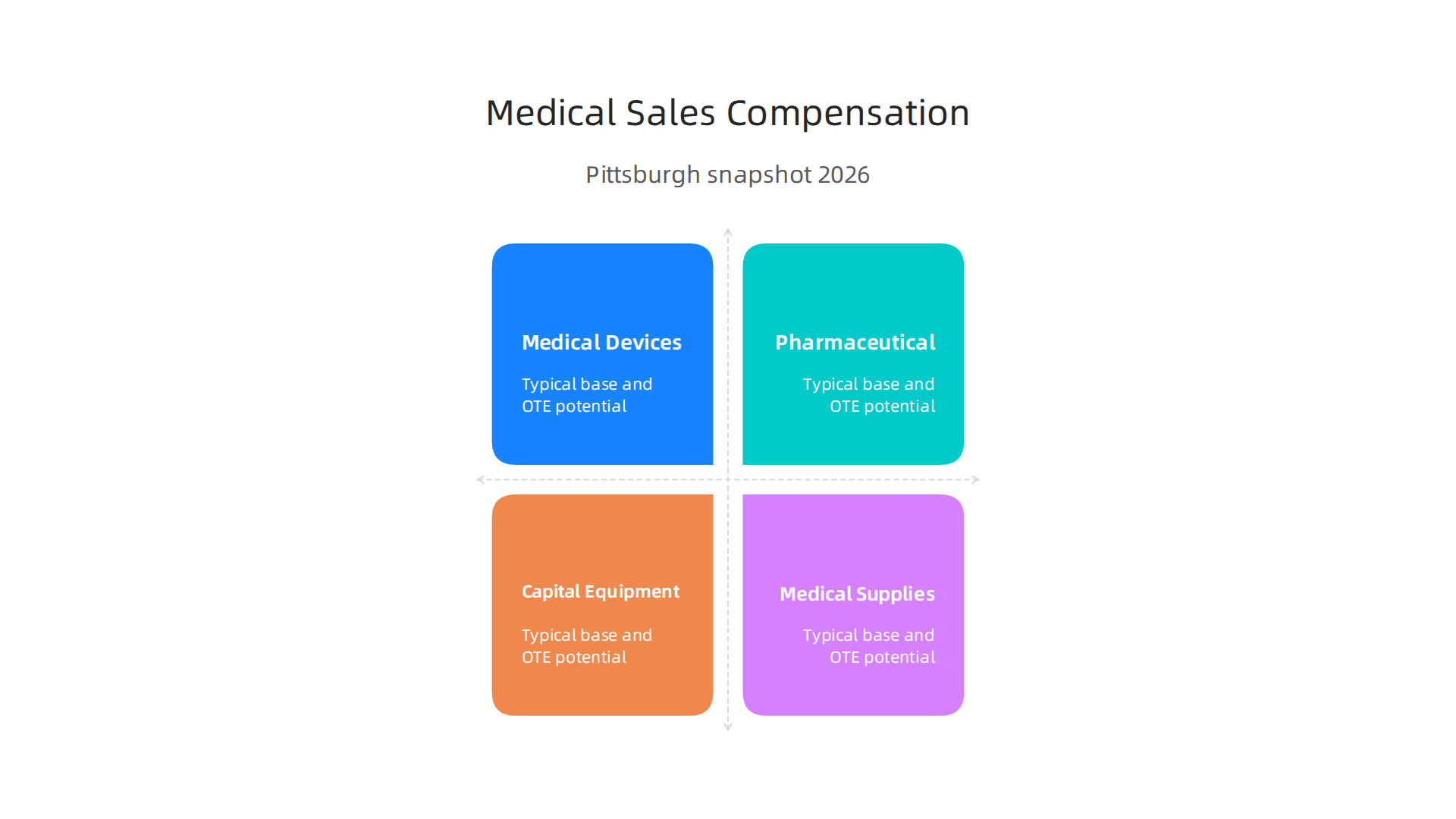
| Specialty | Typical Base Salary Range (Pittsburgh) | On-Target Earnings (OTE) Potential |
|---|---|---|
| Medical Devices (e.g., Orthopedics, Cardiology) | $75,000 – $110,000 | $120,000 – $200,000+ |
| Pharmaceutical Sales | $70,000 – $95,000 | $100,000 – $160,000 |
| Capital Equipment & Surgical Robotics | $90,000 – $130,000 | $150,000 – $300,000+ |
| Medical Supplies & Consumables | $60,000 – $85,000 | $85,000 – $130,000 |
Data synthesized from 2026 industry salary guides and compensation surveys.
As you can see, roles selling high-value capital equipment or complex implantable devices often offer the highest earning ceilings. For instance, a guide on medical device sales compensation highlights that specialties like cardiovascular devices and surgical robotics are at the top of the earnings scale.
Benefits Packages in the Pittsburgh Market
Beyond salary and commission, your full time job offer will include a benefits package. Pittsburgh’s major healthcare employers typically provide strong, comprehensive benefits. According to the 2026 Healthcare Salaries and Compensation Trends guide, competitive benefits are a key part of total compensation. Standard offerings often include:
- Health Insurance: Premium medical, dental, and vision plans, often with strong employer contributions.
- Retirement Plans: 401(k) or 403(b) plans with company matching, a must-have for long-term planning.
- Vehicle Allowance: A monthly car allowance or a company car is standard for field-based reps. This covers gas, maintenance, and sometimes insurance.
- Expense Account: A corporate card or reimbursement system for client meals, travel, and other business expenses.
- Continuing Education: Tuition reimbursement or allowances for certifications and advanced training to keep your skills sharp.
Whether you’re looking at part time jobs with a different benefits structure or a full package, always calculate the total value. A slightly lower base salary with exceptional benefits, a strong commission plan, and a car allowance can be far more valuable than a higher base alone.
Getting a clear picture of compensation helps you negotiate confidently and choose the right path. While Pittsburgh has its own market dynamics, the fundamentals of evaluating a sales package are universal. For more strategies on assessing and negotiating a competitive offer, our guide on landing a sales job in a competitive metropolitan market offers valuable parallels you can apply here.
Your Pittsburgh Job Search Strategy: Where to Look and How to Apply
You know the pay potential. Now, how do you actually land one of those great medical sales jobs in Pittsburgh, PA? Finding the right opportunity takes more than just browsing the big job boards. In 2026, a smart, multi-channel approach is what separates the applicants who get noticed from the ones lost in the pile.

Here is a proven strategy to find and win your next role.
Start Your Search in the Right Places
Cast a wide net, but use the right nets. For medical sales jobs, generic sites can be overwhelming. Start with these targeted resources.
1. Niche Medical Sales Job Boards
These sites are built for our industry. They attract employers who are specifically looking for sales talent with healthcare knowledge. You will find listings here that you might not see anywhere else. Make accounts, set up alerts for "Pittsburgh," and check them daily.
2. LinkedIn: Your Digital Resume and Networking Hub
LinkedIn is non-negotiable. It is your professional front door.

- Optimize Your Profile: Use a professional photo. Your headline should clearly state your specialty, like "Medical Device Sales Professional | Pittsburgh Territory." Fill out your experience with quantifiable achievements, not just duties.
- Search Actively: Use the Jobs tab with filters for "Medical Sales" and location "Pittsburgh, Pennsylvania." Follow companies you are interested in, like the ones mentioned earlier, to see their posts first.
- Connect Strategically: Don’t just send connection requests. Personalize them. Mention a shared group or your interest in their company.
3. Go Direct: Company Career Pages
This is one of the most effective methods. Once you know the key players in Pittsburgh, bookmarks their careers pages. Large companies like Medtronic, Johnson & Johnson, and Stryker, as well as local distributors, often post openings on their own sites before or instead of big boards. Sign up for job alerts. This shows initiative and direct interest.
Tap into the Power of Pittsburgh Networking
In a relationship-driven field like sales, who you know matters. Pittsburgh has a tight-knit medical and business community.
Join Local Professional Associations
Groups like the Pittsburgh Life Sciences Greenhouse (PLSG) network or local chapters of national associations host mixers, educational seminars, and charity events. Attending these is the best way to meet hiring managers and current reps in a low-pressure setting. You are not just asking for a job, you are building your local professional circle.
Attend Industry Events and Conferences
Watch for medical trade shows, hospital vendor fairs, or device training sessions in the region. Even as an attendee, you can make valuable contacts. The conversations you have here can lead to informational interviews or tips about unadvertised roles. Industry analysis for 2026 shows that proactive networking and community building are key factors in career advancement.
Tailor Your Application for the Local Market
When you find an opening, a generic resume and cover letter will not cut it. You must customize.
For Your Resume:
- Lead with Results: Start bullet points with action verbs and numbers. "Increased territory sales by 25%" is stronger than "Responsible for sales."
- Use Local Keywords: If the job is for a Pittsburgh territory, mention your familiarity with the area’s hospital systems (UPMC, AHN) or your understanding of the regional market.
- Match the Job Description: If the listing asks for experience with "capital equipment sales" or "surgeon relationships," make sure those exact phrases appear in your resume where relevant.
For Your Cover Letter:
This is your chance to tell a story. Connect your experience directly to the company’s needs in Pittsburgh.
- First Paragraph: State the specific role you are applying for and express your genuine interest in the company and the Pittsburgh market.
- Second Paragraph: Pick one or two achievements from your resume that directly relate to the job’s requirements. Explain why that experience makes you a good fit for their team.
- Closing Paragraph: Reiterate your enthusiasm. Mention your willingness to relocate to or travel within the Pittsburgh area if applicable.
Whether you are seeking full time jobs or specific part time jobs, this tailored approach shows you have done your homework. In a competitive hiring landscape, companies are looking for candidates who understand their world. A guide on talent retention notes that companies in 2026 are prioritizing candidates who demonstrate a strong cultural and strategic fit from the very first application.
Finding the right role is a sales process where you are the product. By using targeted search methods, building a local network, and sending highly personalized applications, you dramatically increase your chances of success. For more insights on navigating a competitive job market, the strategies in our article on landing a sales job in a competitive metropolitan market are highly applicable to your search in Pittsburgh.
Acing the Medical Sales Interview: Pittsburgh-Specific Preparation
You have landed the interview. Congratulations. Now, the real work begins. For medical sales jobs in Pittsburgh, PA, the interview is your chance to prove you are not just a great salesperson, but the right person for this territory.

In 2026, generic answers do not work. You need Pittsburgh-specific preparation to stand out.
Let us break down how to prepare for the most common interview hurdles you will face here.
Master the Behavioral and Role-Play Scenarios
Interviewers want to see how you think and sell in real time. You will face two main types of challenges.
Behavioral Questions ("Tell me about a time…")
These questions test your past performance. The universal framework for answering them is the STAR method (Situation, Task, Action, Result). For example, if asked about overcoming a sales objection, structure your answer clearly. Describe the specific situation with a hesitant doctor, the task of winning them over, the actions you took (like providing clinical data), and the quantifiable result (a new contract). This method helps you deliver concise, compelling stories. Experts consistently recommend using this structure to organize your responses effectively.
The Dreaded Role-Play
This is very common. You might be asked to "sell me this pen" or, more likely, to conduct a mock sales call with the interviewer playing a skeptical hospital procurement manager.
- Do Your Homework: Know the company’s main product. Is it a spinal implant, a diagnostic test, or a surgical tool? Understand its key benefits.
- Follow a Process: Start with open-ended questions to understand the "customer’s" needs. Then, present your product’s features as solutions to those specific needs. Handle objections calmly and professionally.
- Practice Out Loud: Do not just think about it. Practice with a friend or record yourself. Resources like guides on acing role-play exercises can provide sample scenarios and strategies to build your confidence.
Research and Discuss the Local Healthcare Landscape
This is where you show you have done your Pittsburgh homework. Walking in without knowing the local players is a major red flag.
Know the Key Accounts
Your interviewers live and breathe these systems every day. You should too.
- UPMC (University of Pittsburgh Medical Center): This is a giant. Understand it is not just one hospital but a vast integrated network of hospitals, clinics, and insurance. Mentioning your understanding of navigating large, complex IDNs (Integrated Delivery Networks) shows strategic thinking.
- AHN (Allegheny Health Network): The other major player. Know its key facilities and how it competes with UPMC. This shows you understand the competitive dynamic you would be working within.
- Major Independent Hospitals and Surgery Centers: Be aware of places like Washington Hospital, Butler Memorial, and the numerous ambulatory surgery centers in the region.
Connect Your Experience to Their Territory
When answering questions, pivot to local relevance. If talking about building relationships, you could say, "I understand that in a concentrated market like Pittsburgh, where relationships with key opinion leaders at places like UPMC Presbyterian are crucial, my approach would be…" This directly ties your skill to their world. Thorough research of the company and its territory is a fundamental step in interview preparation.
Negotiate Your Compensation Package Confidently
You have impressed them. Now, it is time to talk numbers. Compensation for medical sales jobs often includes a base salary plus commission or bonus. For full time jobs in this sector, understanding the local market is key to a fair negotiation.
Know the Pittsburgh Market Rate
Use the salary data from earlier in this article as your baseline. In 2026, the cost of living and competitive landscape in Pittsburgh influence these ranges. If the offer is below market, you have data to politely reference.
Negotiate the Whole Package
Look beyond just the base salary. Consider:
- Commission/Bonus Structure: Is it uncapped? What are the accelerators? Understand how you truly maximize earnings.
- Benefits: Healthcare, 401(k) match, car allowance, and expense account.
- Territory Potential: Is the territory you are inheriting established or a rebuild? This impacts your first-year earning potential.
Be Prepared, But Flexible
Go in knowing your minimum acceptable number. Express enthusiasm for the role first, then discuss compensation. You can say, "I am very excited about the opportunity to contribute here. Based on my experience and the responsibilities of this Pittsburgh territory, I was hoping for a package closer to [your target range]." Be ready to have a collaborative conversation. For more on navigating these crucial conversations, especially in competitive markets, the insights from our guide on landing a sales job in a competitive metropolitan market are very helpful.
Remember, the interview is your final sales call. You are selling the most important product: yourself. By preparing for specific scenarios, demonstrating deep local knowledge, and negotiating from an informed position, you show you are ready to win in Pittsburgh from day one.
For a deeper dive into crafting winning answers for any sales role, explore our resource on what to know about landing felon-friendly sales jobs, which covers universal interview strategies for overcoming objections and showcasing value.
Building a Long-Term Medical Sales Career in Pittsburgh
You got the job. You aced the interview and negotiated your package. Now what? A successful career in medical sales jobs in Pittsburgh, PA is about more than just a strong start. It is about building a lasting, rewarding path in this unique healthcare hub. Let us talk about how to grow from your first role into a leader in the field.
Your Career Path: From Rep to Leader
Most careers in medical sales follow a clear progression. Understanding this ladder helps you plan your next move.
- Associate/Entry-Level Representative: You start here, often paired with a senior rep. Your focus is learning products, supporting accounts, and mastering core skills like clinical knowledge and using a CRM system. Experts note that building clinical fluency and relationship skills is the critical foundation at this stage.
- Territory Representative: This is the classic full time job in medical sales. You own a patch of Pittsburgh, managing key accounts like UPMC or AHN facilities. Success is measured by your sales numbers and the strength of your customer relationships.
- Senior Representative or Key Account Manager: You handle the largest, most complex accounts or a specialized product line. This role requires deep strategic thinking and the ability to navigate the politics of big hospital networks.
- District Sales Manager (DSM): This is your first step into management. You lead a team of reps, drive regional strategy, and are responsible for hiring and coaching. The skills shift from pure selling to leadership, data analysis, and business planning. As one resource on sales management highlights, effective communication and negotiation abilities become even more crucial at this level.
- Regional and National Roles: From DSM, you can move into broader leadership, marketing, or training roles at the corporate level.
Never Stop Learning: Pittsburgh’s Training Resources
The best reps never stop learning. Pittsburgh offers great local resources to sharpen your skills.
- Professional Associations: Groups like the Pittsburgh Chapter of the American Association of Pharmaceutical Representatives (AAPR) or medical device networks offer local meetings, seminars, and networking. Connecting with local peers is invaluable.
- University and Hospital Programs: The University of Pittsburgh and Carnegie Mellon often offer continuing education courses in business, healthcare management, and communication. Also, attending grand rounds or seminars at hospitals like UPMC Presbyterian keeps your clinical knowledge sharp.
- Online and Corporate Training: Your company will provide product training. Supplement this with external courses on advanced sales methodologies, new technologies, or leadership. Continuous skill development is a non-negotiable for long-term success, as the demands on reps extend far beyond a simple pitch.
Switching Specialties Within the Pittsburgh Market
Maybe you are in devices but want to move to pharmaceuticals. Or you are in capital equipment and eye a move to diagnostics. Pittsburgh’s concentrated market can make this easier than you think.
- Leverage Your Local Network: Your existing relationships with surgeons, nurses, and procurement staff are your biggest asset. They can provide referrals and insights into other companies.
- Highlight Transferable Skills: When interviewing, emphasize your deep knowledge of the Pittsburgh healthcare landscape. Knowing how to get a product into UPMC is a huge skill, regardless of the product. Talk about your proven relationship-building and strategic account management.
- Bridge with Education: If moving to a new clinical area, take a course or get certified to close knowledge gaps. Show initiative before you make the jump.
- Use Specialized Recruiters: Pittsburgh has recruiters who specialize in medical sales. They know which companies are expanding and can connect you with opportunities that fit your desire to pivot.
Building a career is a marathon, not a sprint. By understanding the progression, committing to ongoing education, and strategically using your local network, you can build a fulfilling, long-term future in Pittsburgh medical sales. For more insights on crafting a winning career strategy in any market, explore our resource on universal interview strategies for showcasing your value.
Summary
This guide breaks down the Pittsburgh medical sales job market in 2026, explaining why the region—anchored by major hospitals and life‑science research—offers strong demand for reps across orthopedics, pharmaceuticals, devices, and capital equipment. It covers who’s hiring (from global firms like Stryker and Medtronic to local distributors and biotech startups), the must‑have skills and credentials, realistic pay expectations including base and OTE ranges, and the best search strategies for landing roles. You’ll get practical advice on tailoring resumes and cover letters for Pittsburgh accounts, preparing for role‑plays and behavioral interviews, and negotiating total compensation and benefits. Finally, the article outlines career progression steps and how to pivot specialties using local networks and continuing education so you can build a long‑term, high‑earning medical sales career in Pittsburgh.