

Thinking about your next big career move? For many sales professionals, retail jobs are a smart choice.

You might think of retail as just selling things in a store, but it’s much more than that. It offers many different kinds of full time jobs and clear ways to grow your career. In fact, the retail trade sector continues to be a big part of employment in the U.S. into 2026, showing steady job numbers throughout the year [1, 2].
Why should retail be a top target job for you? Well, it’s a field with lots of opportunities. Whether you are just starting out or want to switch careers, retail has roles that fit many skills. You can find sales jobs that let you work directly with customers, manage a team, or even handle online sales. Big companies like Walmart jobs or stores offering HEB careers are always looking for people with good sales skills. There are even many job openings in retail trade, with a rate of 4.0 in January of 2026 alone [3]. This means there’s a real need for sales talent.
But finding the perfect retail job can sometimes feel a bit tricky. People often wonder where to find the best openings, how much they can really earn, and what kind of questions they will get in an interview. You might ask, "How do I stand out for those great target jobs?" or "What do I need to know about sales associate interview questions?" That’s why it’s important to be prepared. For example, knowing how to answer common questions is key for any sales role [4]. Many resources can help you get ready for interviews, like those that cover sales associate interview questions, helping you feel more confident [5, 6]. Getting ready can make a big difference in landing the retail sales job you want.
Retail Sales Job Taxonomy: The Roles You Should Target
When you think about a career in retail sales, you might picture just one kind of job. But actually, there are many different target jobs you can aim for. Retail is a big world with lots of paths, from helping customers directly to managing entire stores. Knowing these different roles helps you find the perfect fit for your skills and career goals. Let’s look at some common retail jobs and how they can lead to great full time jobs.
Here’s a breakdown of common retail roles:
- Sales Associate: This is often where people start. A sales associate helps customers find what they need, answers questions, and makes sure they have a good shopping experience.

They also work to meet sales goals and keep the store tidy. No special schooling is usually needed for these roles, but good people skills are a must. Many companies like those offering Walmart jobs or HEB careers have many sales associate openings, especially with U.S. retail sales seeing growth in early 2026 [1].
- Key Holder: A key holder is a sales associate who has extra duties. They might open or close the store, handle money, and sometimes help solve small problems that come up. This role shows you are trusted and can be a first step into management.
- Floor Supervisor: As a floor supervisor, you’re in charge of a small team of sales associates. You make sure everyone is doing their job well, help customers with bigger issues, and keep the sales floor running smoothly. This job is all about leading by example and helping your team succeed.
- Store Manager: This is a big job. A store manager runs the entire store. They hire and train staff, manage inventory, set sales goals, and make sure the store meets its targets. They handle all parts of the business, making sure customers are happy and the store makes money. These are often well-paying retail jobs in 2026, offering significant responsibility [2].
- Visual Merchandiser: If you have a creative eye, this could be your target job. Visual merchandisers design how products are displayed in the store. They make windows look appealing and arrange items inside so they catch customers’ attention. Their goal is to make the store look great and encourage people to buy.
- Clienteling Specialist: This role is about building strong, lasting relationships with important customers. A clienteling specialist remembers customer preferences, tells them about new products they might like, and provides a very personalized shopping experience. This is common in stores selling luxury or high-value items.
Each of these roles requires different skills and offers unique career steps. For instance, you could start as a sales associate and with hard work and training, become a floor supervisor, and then even a store manager. Many retail companies offer clear paths for growth. Some of the highest-paying retail jobs in 2026, for example, are in management or specialized consultant roles [3].
The retail industry is always changing, and so are the skills needed. Employers in 2026 are looking for people who can adapt and learn new things [4]. To find the best target jobs for you, think about your strengths and what kind of work makes you happy.
If you’re looking to dive deeper into specific sales career paths and prepare yourself for success, then you’ll want to explore comprehensive resources.
Click Here to Explore Sales Career Paths and Interview Strategies
Entry-level retail roles: how to qualify and stand out
After learning about the many different kinds of retail roles, you might be wondering how to get your foot in the door. Good news! Many retail target jobs, especially roles like Sales Associate, are perfect entry-level positions. You often don’t need years of experience to start. Instead, employers in 2026 look for certain skills and a great attitude. Here’s how you can show you’re the right person for these full time jobs and stand out.
How to Qualify for Entry-Level Retail Jobs
Even if you haven’t worked in a store before, you can still show you’re ready for the job. It’s all about how you present yourself and your skills.
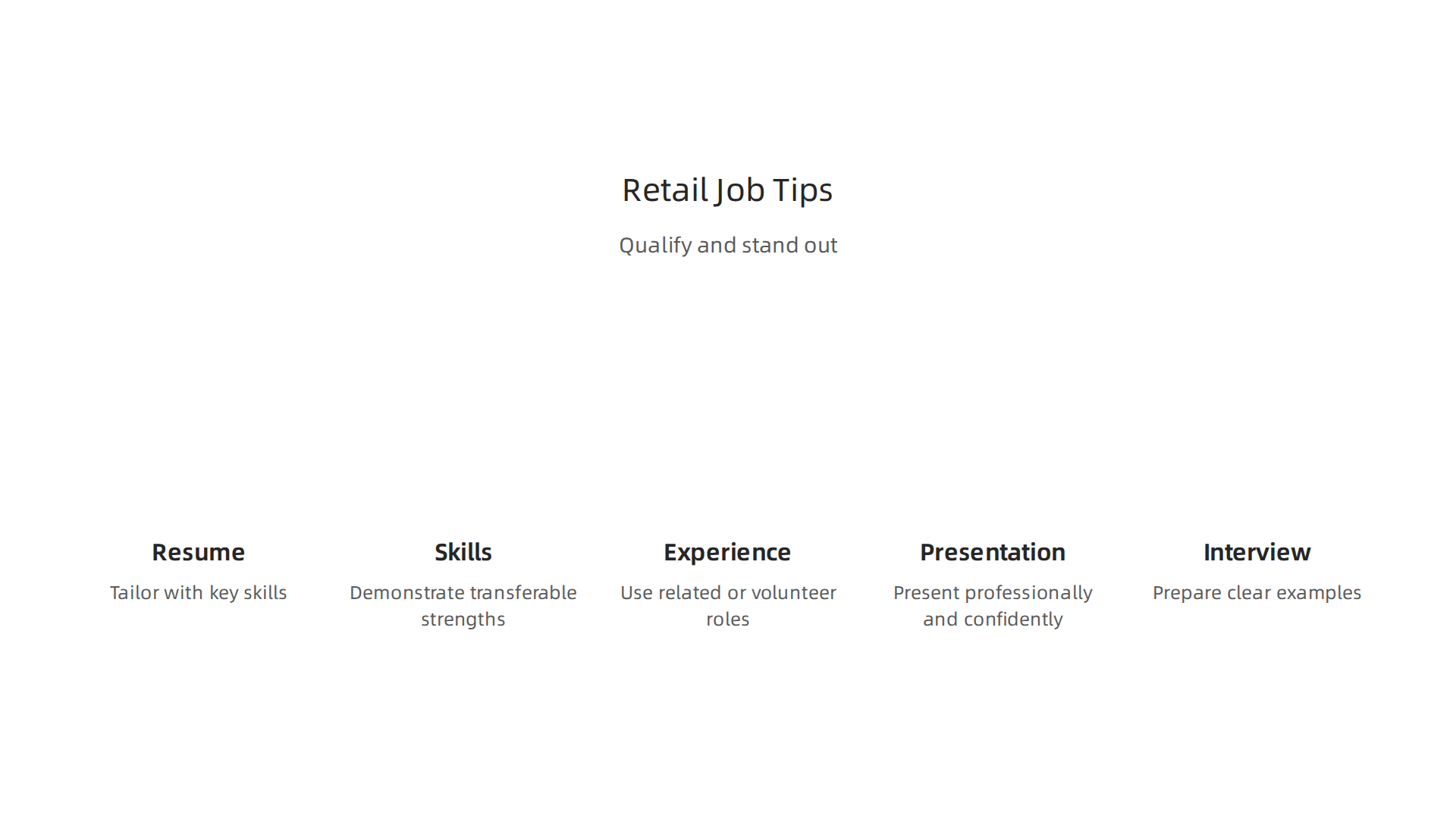
- Frame Your Resume Smartly: Your resume is like your personal ad. Make sure it shows off any customer service experiences you have. Did you ever help people at school events, volunteer, or work a summer job? These count.
- Highlight Transferable Skills: These are skills you’ve learned that can be used in a new job. For retail, important transferable skills include:
- Talking to people: Can you explain things clearly?
- Listening: Do you pay attention when others speak?
- Being a team player: Can you work well with others?
- Problem-solving: Can you help fix a small issue?
- Being reliable: Do you show up on time and do what you say you will?
- Show Volunteer or Part-Time Experience: Any time you’ve helped out or worked, even unpaid, can show you have a good work ethic and are eager to learn. Maybe you helped at a local charity or a community event.
- Learn Retail Math Basics: Don’t worry, it’s not super hard math. This means understanding things like making change, figuring out discounts, or knowing how much a customer spent. Showing you can do these simple tasks is a big plus.
Get Ready for Your Interview
Once you’ve applied, the next step is usually an interview. This is your chance to shine and show why you’re perfect for those walmart jobs or heb careers.

Getting ready means practicing.
- Research the Company: Before your interview, learn a little about the store you want to work for. What do they sell? What do customers say about them? This shows you care.
- Practice Answering Questions: Interviewers will ask about you and how you handle different situations. They want to know how you think and act. Common questions include "Tell me about yourself" or "Why do you want to work here?" You might also be asked about your understanding of good customer service [1].
- Prepare for Behavioral Questions: These questions often start with "Tell me about a time when…" or "Give me an example of…" They want to hear stories about how you’ve used your skills. For example, they might ask about a time you helped someone solve a problem or dealt with a difficult situation [2].
- Be Ready for Sales Scenarios: Sometimes, interviewers might give you a made-up situation. They could ask, "What would you do if a customer couldn’t find what they were looking for?" or "How would you tell a customer about a new product?" This helps them see how you’d act on the sales floor [3].
- Expect Role-Play Tips: In some interviews, they might even ask you to pretend. They could say, "Imagine I’m a customer, try to sell me this item." Just be yourself and show off your helpful, friendly side. You can find many helpful videos online that show common interview questions and good answers [4].
Remember, the goal is to show you’re eager, reliable, and ready to help customers. By preparing well and highlighting your skills, you can make a great impression and land those entry-level target jobs. Learning how to navigate job interviews and understand different career paths can really set you up for success.
Ready to take the next step in your sales career journey?
Click Here to Explore Sales Career Paths and Interview Strategies
After landing your first entry-level retail role, you might be thinking, "What’s next?" The good news is that retail offers many paths for growth, especially as you gain experience. You can move from an entry-level position to mid-level leadership or even into special sales areas. These are often great opportunities for full time jobs with better pay and more responsibility.
Moving Up in Retail Sales
Imagine starting as a Sales Associate. If you do a great job, you could soon become a Senior Sales Associate. This means you might help new team members or take on more important tasks. From there, many people move into supervisor roles. As a supervisor, you would help lead a small team, make sure goals are met, and keep things running smoothly. Big retailers like Walmart and HEB often have clear paths for this kind of growth within their teams.
Beyond supervision, you could become an Assistant Store Manager and then a Store Manager. These roles involve a lot more responsibility, like managing the whole store, handling budgets, and training staff. Some retail roles like Merchandising Director or Retail Operations Specialist can even be among the highest paying in retail [16, 15]. These are all important target jobs for people who want to build a lasting career in sales.
Exploring Specialty Retail Sales Niches
Besides moving up the management ladder, you can also move sideways into special sales areas. These "niches" need particular skills and knowledge.
- E-commerce Sales: This is about selling products online. As more shopping happens on the internet, companies need skilled people to manage their online stores and help customers who are buying from home. Roles like Digital & E-commerce Manager are seeing strong demand in 2026 [18].
- Clienteling: Think of this as building a special relationship with important customers. You get to know their tastes and help them find exactly what they want. This is very common in high-end or luxury retail.
- Wholesale Accounts / B2B Retail Sales: Instead of selling one item to one person, you sell many items to other businesses. For example, a clothing brand might sell its new collection to smaller boutiques. This is called Business-to-Business (B2B) sales.
- Product Expertise: You can become an expert in a certain type of product. For example, a Cosmetic Consultant or a Jewelry Salesperson knows everything about their specific items. This deep product knowledge can lead to higher-paying retail jobs [15].
- Merchandising Analytics: This involves using sales numbers and customer information to decide which products to sell, how to price them, and where to put them in the store to get people to buy. This kind of job needs someone who is good with numbers and understands trends. The 2026 Job Skills Report points out that data-focused roles are very much in demand [4].
Key Skills for Mid-Level and Specialty Roles in 2026
The world of work changes quickly, and the skills needed for jobs have shifted a lot in recent years [5]. To succeed in these mid-level and specialty retail sales careers in 2026, you’ll need to grow your abilities.
- Leadership and Teamwork: For supervisor and manager roles, you’ll need to guide others, solve problems, and help your team meet sales goals [1]. Retail management training often focuses on these leadership abilities [22].
- Digital Skills: Knowing how to use online tools, social media, and customer relationship management (CRM) systems is a must for e-commerce and even in-store roles.
- Data Know-How: Being able to look at sales figures and understand what they mean will help you make smart choices, especially in merchandising analytics.
- Deep Product Knowledge: For specialty roles, really knowing your products inside and out gives you a big advantage.
- Building Customer Relationships: Going beyond a quick sale to create loyal customers who come back again and again.
- Adaptability: The retail world is always changing. Being able to learn new skills and adjust to new ways of working is incredibly valuable. In fact, sales training programs in 2026 often teach how to stimulate interest, build trust, and create value for customers [23].
These kinds of skills can also open doors to advancement in larger organizations, similar to opportunities in other big companies. You can always learn more about advancing your career within large organizations.
As you think about growing your retail sales career, it’s good to know that not all jobs keep you in a store all day. In 2026, many exciting target jobs are remote or hybrid, meaning you work from home or a mix of home and office.

This can offer a lot of flexibility.
Remote and Hybrid Retail Sales Jobs
More and more retail companies are looking for people who can sell or help customers from anywhere. This has opened up new kinds of roles:
- Online Sales Representatives: These folks sell products online, often chatting with customers through websites, emails, or video calls. They might help someone pick out clothes or explain how a new gadget works, all without ever meeting in person.
- Customer Success for Retail Brands: After someone buys something online, these team members make sure the customer is happy. They help with questions, returns, or anything else needed to keep customers coming back. This is very important for building loyalty for online businesses.
- Remote Wholesale Sales (B2B Retail Sales): Remember selling to other businesses? You can do this from home too! You’d talk to store owners or buyers from different companies, showing them products they might want to sell in their own shops.
A "hybrid" job might mean you work from home most days but go into an office or store a couple of times a week for meetings or special events. This gives you the best of both worlds.
Understanding Commission-Based Pay
Many sales jobs, especially remote ones, use something called "commission." This is how your pay can work:
- What is Commission? It means you get a slice of the money from every sale you make. If you sell a lot, you earn a lot!
- Commission-Only Roles: Some remote sales target jobs are 100% commission. This means you don’t get a regular paycheck unless you make sales [2]. It can be very rewarding if you’re a strong seller, with potential for high earnings [9].
- Base Salary Plus Commission: This is a common choice for many full time jobs in sales. You get a steady "base salary" every two weeks, plus extra money (commission) based on how much you sell [1]. This gives you a bit more safety while still letting you earn more for good performance [5]. Many remote sales positions offer this mix, and top earners can make over $100,000 a year [8]. Some positions even combine competitive hourly pay with commission and bonuses [3].
Finding Flexible Retail Sales Jobs
Looking for these kinds of jobs can be different from regular in-store roles. Here are some tips:
- Search Smart: Use websites like Indeed or ZipRecruiter [4, 6, 7]. Type in keywords like "remote retail sales," "work from home sales," "online sales rep," or "hybrid sales."
- Read Carefully: Look at the job description closely. Does it sound like a good fit for your skills? Does it mention training?
- Understand Pay: Make sure you know how you’ll be paid. If it’s commission-only, be ready to work hard and understand the product well.
- Watch for Red Flags: Be careful if a company asks you for money upfront for training or promises incredibly high earnings with no effort. Real jobs usually don’t do that.
These flexible retail target jobs can be a great way to advance your career and earn a good living, especially if you enjoy working independently and have a knack for selling.
If you’re looking for these kinds of flexible sales jobs or want to learn more about sales careers and how to find them, visit Sales Reps Positions.
In the world of retail sales, how you get paid can look quite different from one job to the next. Understanding these payment models is key to finding the best target jobs for you and making sure you get paid fairly. Let’s break down the common ways you can earn money in retail sales, including base pay, commission, bonuses, and more.
Different Ways You Get Paid
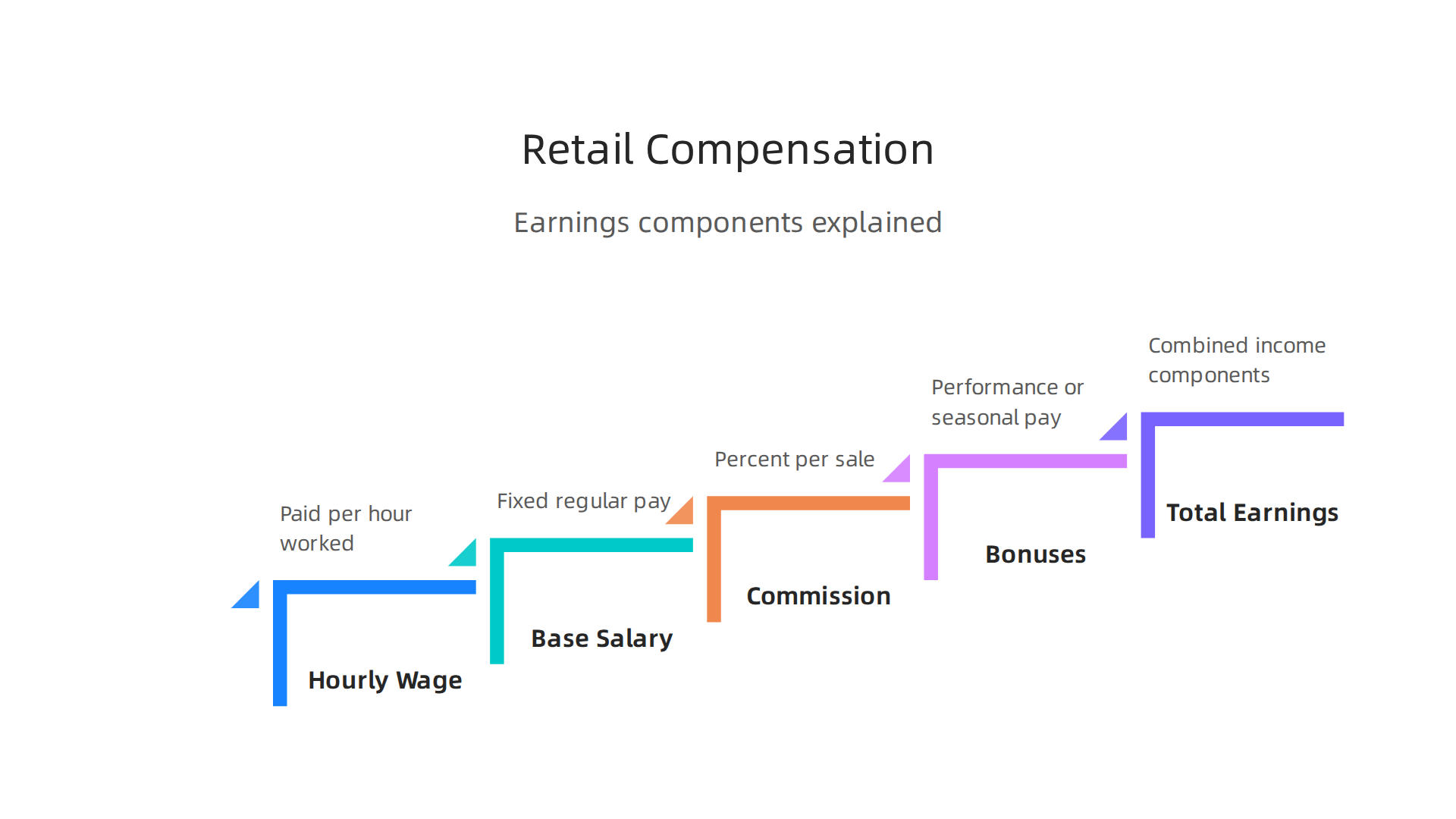
When you work in retail sales, your paycheck can be made up of several parts. Here are the main types of compensation you’ll find:
- Hourly Wage: This is perhaps the simplest way to get paid. You earn a set amount of money for every hour you work. This is very common for in-store retail positions. For example, many entry-level full time jobs at large stores might start with an hourly wage.
- Base Salary: Instead of hourly pay, some retail sales target jobs offer a fixed "base salary." This means you get a steady amount of money every week or every two weeks, regardless of how many sales you make. It provides a reliable income and is often seen in more senior sales roles or positions that involve more than just direct selling.
- Commission: We talked about this a bit before. Commission means you get a slice of the money from every sale you make. It’s often a percentage of the sale price. For example, if you sell a $100 item and your commission is 10%, you earn $10. Some roles are "commission-only," where this is your only pay, while others combine commission with a base salary. Many top sales professionals in 2026 find that adding commission to a base salary helps them earn more when they perform well, with some top earners making over $100,000 a year [1].
- Bonuses: Think of bonuses as extra rewards for doing a great job. Companies might give you a bonus for hitting certain sales goals, signing up a lot of new customers, or being a top performer in your team. These are usually paid out on top of your regular wage, salary, or commission. Some positions even offer competitive hourly pay with commission and performance-based bonuses [2].
- Profit-Sharing: Less common for individual sales roles, but some companies offer profit-sharing. This means if the company does well and makes a lot of money, a small part of those profits is shared among the employees. It’s a way for you to benefit from the overall success of the business.
Adding It All Up: Your Total Earnings
Your total earnings will be the sum of these different parts. For many sales professionals, especially in full time jobs, the combination of a base salary plus commission can be very rewarding. For example, in January 2026, there were many job openings in retail trade, showing a lively market [3]. Your ability to sell can directly increase your take-home pay through commission and bonuses, often making your total earnings higher than a simple hourly or salaried position.
Asking Smart Questions and Negotiating Your Offer
When you’re looking at target jobs and going for interviews, it’s super important to understand how you’ll be paid. Don’t be shy about asking questions!
Here are some good questions to ask an employer:
- "What is the base salary or hourly wage for this position?"
- "How does the commission structure work? What percentage do I earn per sale?"
- "Are there specific sales targets or goals I need to meet to earn commission or bonuses?"
- "What do typical sales reps in this role earn in a year, including commission and bonuses?"
- "When is commission paid out? Is it weekly, bi-weekly, or monthly?"
It’s also a good idea to research typical pay for similar target jobs in your area or industry. You can look at job listings for big retailers, even for well-known companies like Walmart jobs or HEB careers, to see general pay ranges. This research helps you know what’s a fair offer and gives you confidence to negotiate for better pay if you feel it’s deserved. Remember, the employment situation in retail is always changing, with some areas seeing shifts in available positions [4, 5].
Being prepared to discuss and negotiate your compensation shows that you are serious and understand your worth. For more broad advice on navigating the job market and securing a great sales role, consider checking out our guide on landing a Los Angeles sales job in 2026. The tips there can help you, no matter where you are looking for target jobs.
Ready to find your next great sales opportunity and put these compensation insights to work?
Explore exciting sales career paths and job openings today.
To really do well and move up in retail sales, it’s not just about showing up. It’s about having the right skills and learning new things all the time. Actually, the skills needed for jobs have changed a lot, with about a 33% shift since 2022 [1]. In 2026, companies are always looking for people who can keep up and even get ahead.
Important Skills for Retail Sales
Good sales reps have a mix of "hard skills" and "soft skills." Think of hard skills as the know-how for sales tasks and soft skills as how you work with people.
Hard Skills (Sales Know-How)
These are the direct ways you help make sales happen:
- Finding New Customers (Prospecting): This means looking for people who might want to buy what you’re selling. For example, maybe you help someone in the store, and they tell their friends about you.
- Helping Customers Decide (Closing): This is about guiding a customer to make a purchase they’ll be happy with. It’s about helping them say "yes." Some part-time sales associate jobs even have goals to meet or exceed sales [2].
- Knowing Your Products: You need to know all about what you sell. The more you know, the better you can answer questions and help customers find exactly what they need.
- Suggesting More (Upselling and Cross-selling): This means helping a customer find a better or more expensive version of what they planned to buy (upselling), or suggesting other items that go well with their main purchase (cross-selling).
- Using Sales Tools: Many stores use computer programs to keep track of customers and sales. Knowing how to use these tools, often called CRM (Customer Relationship Management) software, is a big plus.
Soft Skills (Working with People)
These skills help you connect with customers and solve problems:
- Great Communication: This is about listening carefully to what customers need and explaining things clearly.
- Problem-Solving: Sometimes a customer has a unique need or a problem. Being able to find a good solution makes them happy.
- Customer Service: Being friendly, helpful, and making sure customers have a good shopping experience.
- Handling Tough Talks (Conflict Resolution): Once in a while, a customer might be unhappy. Knowing how to calmly help them feel better and find a solution is super important.
Training and Certifications That Help You Grow
Many companies, even big ones like those offering Walmart jobs, want to help their employees get better at these skills. They know that good training makes a difference [3].
- Company Training Programs: Most retail jobs start with training. This often includes learning about the company’s products, how to talk to customers, and how to use their sales systems [4]. These programs are designed to give you the exact skills the company needs.
- Special Certificates (Micro-Certifications): You can also get small, special certificates that show you know a lot about specific sales topics. These might be called "sales certifications" or "micro-credentials." In 2026, many places offer certifications, like the Certified Professional Sales Person (CPSP), which can help you stand out [5, 6].
- Online Learning: Websites like Coursera and other online schools offer courses in sales, customer service, and business.

Taking these courses can show you’re serious about your career.
- Work-Based Learning: This is when you learn on the job through tasks and projects. It’s a great way to gain real-world experience and develop skills that employers are looking for [7].
These trainings and certificates don’t just teach you new things. They also show employers that you are keen to learn and improve. This can make a big difference when you’re looking for better target jobs or aiming for a promotion in your current role, especially for full time jobs. Many employers are actively hiring for retail and frontline sales roles in 2026, so having these skills will definitely move you forward [8].
Ready to build your sales skills and find exciting opportunities? Explore how to boost your career and land great roles on Sales Reps Positions.
Summary
This article is a practical guide to targeting retail sales jobs, explaining the variety of roles from sales associate to store manager and specialty positions like visual merchandiser or clienteling specialist. It covers how to qualify for entry-level work—what to put on your resume, which transferable skills matter, and how to prepare for behavioral and role-play interview questions. The piece also explains pay models (hourly, base salary, commission, bonuses), how to ask about and negotiate compensation, and the rise of remote and hybrid retail sales roles. You’ll learn concrete career paths for advancement, the in-demand hard and soft skills for 2026, and training or micro-certifications that boost your chances. Read it to find the right target jobs, understand earning potential, and get actionable steps to land and grow in retail sales.