

Introduction
The sales job market in 2026 is tougher than most people realize. Companies are getting pickier about who they hire, and the old way of applying to everything you see just is not working anymore. According to a recent report by SHRM, the 2026 labor market outlook shows hiring has slowed down in many sectors, making competition for good roles even stiffer.
If you are spending hours scrolling through job boards and sending out generic applications, you are probably feeling frustrated.

That is where a strategic job lot approach can change everything. Instead of casting a wide net, you focus your energy on the best opportunities that match your strengths.
Here is the thing. Most job seekers waste time on broad searches when they should be targeting specific roles that are actually hiring right now. Sales recruitment trends in 2026 show that companies are looking for candidates with very specific skills and experience. If you are not tailoring your search, you will get overlooked.
This article gives you a research-backed framework to find your next sales role efficiently. We will cover the most in-demand sales jobs in 2026, how to spot the best opportunities, and practical steps to land a role fast. For even more targeted advice, check out our guide on retail sales jobs and how they can fit into your career plan.
You deserve a job search that works smarter, not harder. Let us get started.
Decoding the Job Lot
By now, you understand why the old spray-and-pray approach to job hunting fails in the 2026 sales market. But what does a smarter strategy actually look like? It starts with understanding the concept of a job lot.
In sales recruiting, a job lot is not about applying to every role you see. It is a curated set of sales openings that match your specific criteria. Think of it as your personalized shortlist.
The term comes from the old world of bulk purchasing. Merchants would buy a "lot" of goods at a discounted rate. Today, some of the best best job search sites reddit threads and smart job platforms apply the same logic to your career. They aggregate the best opportunities into a single, focused list.
Here is why this approach matters so much right now.
Three big advantages of a smart job lot
It saves you time. Instead of scrolling through thousands of generic postings, you focus only on roles that fit your background. In a market where hiring has slowed down, time is your biggest asset. According to the latest BLS Job Openings and Labor Turnover Summary, competition for open roles is fierce. You cannot afford to waste a single minute.
It creates better matches. Sales roles in 2026 are becoming highly specialized. Companies are not just looking for a salesperson. They want someone with a very specific background. A curated job lot filters out the noise. It highlights the full time jobs where your exact skills are needed. Recent sales recruitment trends from Meritt confirm that companies now prioritize specific industry experience over general sales ability. A focused list is much more effective than a long one.
It reduces decision fatigue. Applying to too many jobs makes you burn out fast. When you have a smaller list of high-quality leads, you can put more effort into each application. That means a better resume, a better cover letter, and a better chance of landing an interview.
If you want to build your own job lot, start by picking a niche. For example, you can use a dedicated guide to break down opportunities in specific sectors. Check out our breakdown of retail sales jobs to see how a focused search works in practice. A recent analysis of the most in-demand sales jobs in 2026 by Flexa confirms that niche knowledge is the key to getting hired fast.
Stop applying broadly. Start curating your job lot today.
Identifying Your Ideal Sales Role
Now that you know what a job lot is, you need to figure out which roles belong in it. Not every sales job is right for you. The goal is to find the ones that match your strengths, your preferences, and your goals.
Let me walk you through three steps that will help you build a smart job lot.
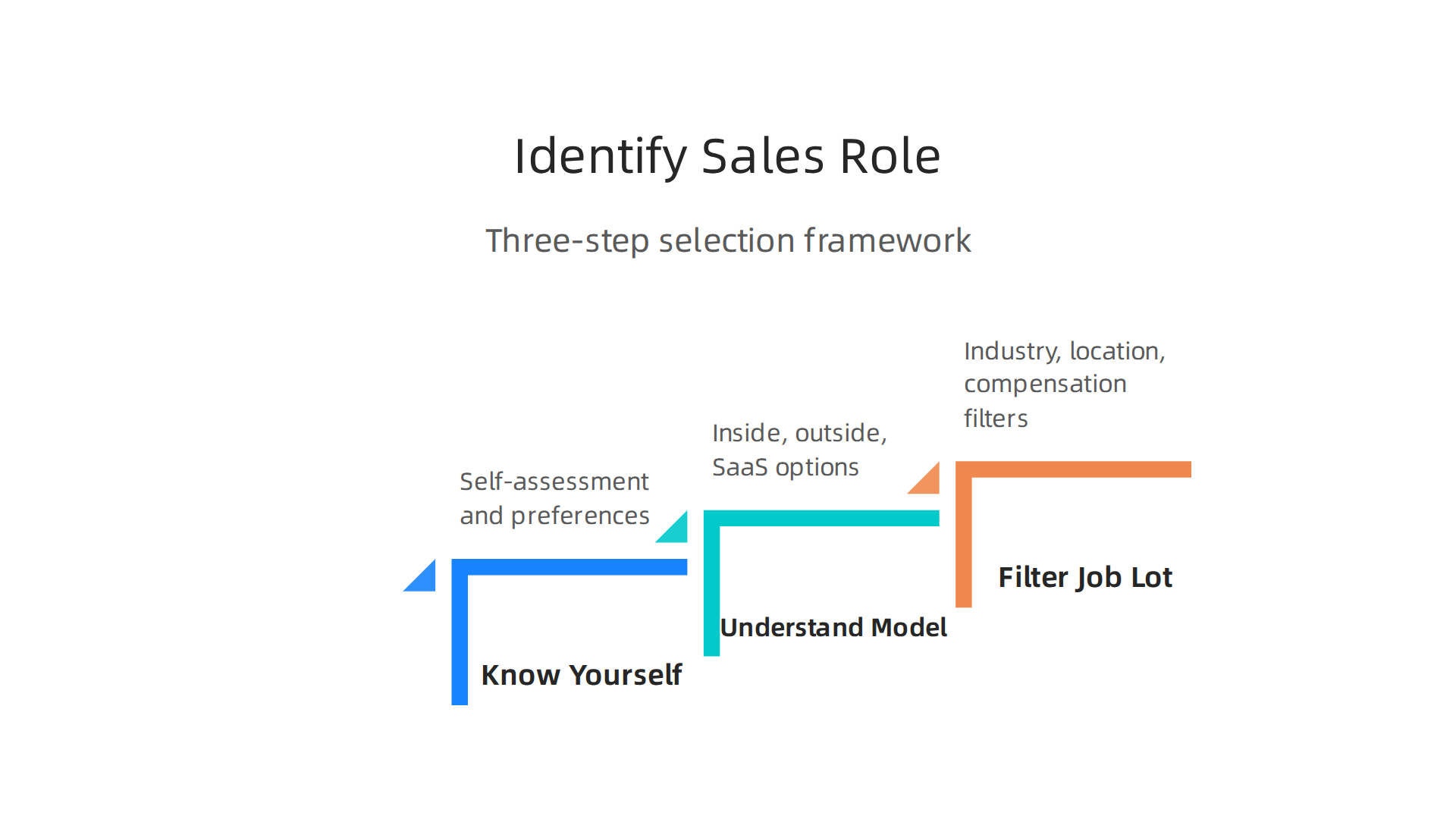
Step 1: Know yourself
You cannot find the right role if you do not know what you are looking for. Start with some simple self-assessment tools.

Personality tests like DISC or the Strong Interest Inventory can reveal your natural selling style. Skill inventories help you see where you shine and where you need work.
Maybe you are great at building relationships but struggle with cold calls. That is important info. It tells you to look for roles that rely on account management instead of prospecting.
Step 2: Understand the sales model
Every company has a different sales approach. Do you want an inside sales role where you work from a desk or a home office? Or would you rather be on the road doing outside sales? What about SaaS versus traditional product sales?
These differences matter a lot. According to a 2026 guide to researching a company for sales from GenRect, you should study a company’s sales model before you apply. If you prefer fast-paced closing, a long-cycle enterprise role will frustrate you. If you hate being on the phone, an inside sales gig is not for you.
A recent survey by Alpha Apex found that top candidates now care more about the day-to-day work than just the paycheck. So take the time to understand what a typical day looks like at each company.
Step 3: Filter your job lot
Your job lot is only useful if it is focused. Use it to filter by three things:
-
Industry. Do you want healthcare, tech, manufacturing, or something else? A dedicated guide can help you explore options like retail sales jobs to see if that sector fits you.
-
Location. Are you open to remote work, or do you want a specific city? For example, a guide to Los Angeles sales jobs can show you what is available in that market.
-
Compensation. Know your number. Base salary, commission structure, and total earning potential all matter. Recruiters from Naviga Recruiting emphasize that the most relevant candidates are the ones who know exactly what they want. Do not settle for anything less.
When you build your job lot with these three filters, you end up with a shortlist of full time jobs that actually fit you. And right now, companies are looking for jobs hiring immediately because hiring managers cannot afford to waste time on mismatched candidates.
Start with your own strengths. Then let the job lot do the filtering for you.
Understanding Sales Compensation Structures
Once your job lot starts taking shape, your focus shifts to the money. A job might look perfect on paper, but if the pay structure does not match your needs, it will not work for long. Let me break down how sales compensation actually works.
The building blocks of sales pay
Sales compensation is not just a single number. It has several moving parts. According to a guide on sales compensation planning from Varicent, companies design these plans to attract and keep the best talent. Here are the main pieces you will see:
- Base salary. This is your guaranteed income. It gives you stability month after month.
- Variable commission. This is the performance piece. The more you sell, the more you earn. In some roles, this is uncapped.
- Bonuses. These are extra rewards for hitting a specific goal, like closing a certain number of deals in a quarter.
- Draw account. Think of this as an advance against future commissions. Be careful with this one. If you leave before you earn enough, you may owe money back.
How pay varies by industry
Not all sales roles pay the same way. The mix changes a lot depending on where you work.
- Tech and SaaS. These roles often have a high base salary plus uncapped commission. The earning potential is huge.
- Medical device. Longer sales cycles and stricter rules mean the compensation is usually very high. If you are curious about this path, this guide to medical sales jobs in Pittsburgh shows how the pay structure works in a real market.
- Real estate. Almost always 100% commission. Great if you are a self-starter. Risky if you need a steady paycheck.
- Retail. If you prefer a steady base pay with a bonus on top, retail might be a better fit. Check out this guide to retail sales jobs to see how compensation looks in that world.
Understanding OTE and TC
You will hear these two terms a lot during your search.
OTE stands for On-Target Earnings. This is your base salary plus the commission you would earn if you hit 100% of your quota. Total Compensation (TC) includes OTE plus bonuses, benefits, and sometimes stock options.
When you look at full time jobs or jobs hiring immediately, the OTE number will catch your eye. Do not assume you will earn that amount in your first month. Always ask the recruiter how many reps actually hit their quota. If the number is low, that OTE is not realistic for you.
A lot of people search for advice on the best job search sites reddit to find leads. That is a good start. But the real power comes from knowing how to read a compensation plan before you sign. Add that skill to your toolkit, and your job lot will only get stronger.
Bridging Skill Gaps for Competitive Edge
You know what the salary looks like. Now comes the real work. Every sales role in your job lot has a hidden requirement: a set of skills that separate average reps from top performers. If you do not have those skills, you will not get the offer. Let me show you how to find your weak spots and fill them fast.
The skills that matter most in 2026
The game has changed. According to Randstad USA’s guide on trending sales skills in 2026, automation and AI are reshaping the job. You still need the classics like prospecting, active listening, and closing techniques. But now you also need CRM proficiency and the ability to work with data.
A report from Pulse Recruitment on which sales skills to focus on in 2026 confirms that the old playbook is dead. Companies want reps who can handle complex buying committees and use digital tools to personalize every interaction. If you are looking at full time jobs or jobs hiring immediately, these are the skills recruiters check first.
How to run your own skill gap analysis
Do not guess. Compare your current abilities with what the job description asks for.
- Pick three full time jobs in your job lot.
- Write down the skills each one demands.
- Be honest with yourself. Where do you fall short?
If you see a pattern, that is your gap. Maybe you lack CRM experience. Or your cold calling needs work. The Archetype article on skills most in demand for salespeople in 2026 notes that successful reps need a much broader skill set than before. Narrow it down to two or three gaps you can close in a few weeks.
The best training resources right now
You do not need to spend a fortune. Free and low-cost options exist.

- HubSpot Academy offers free certifications on prospecting and CRM use.
- Salesforce Trailhead is perfect if you want to prove you can handle a major CRM platform.
- Role-play groups help you practice active listening and objection handling. Find one on LinkedIn or through a local sales meetup.
- Online courses on closing techniques from platforms like Highspot can sharpen your approach.
If you are considering the medical device path, check out this guide to medical sales jobs in Pittsburgh. It shows how specific certifications can set you apart in that niche.
Start working on your gaps today. Every skill you build makes your job lot stronger and your next interview easier.
Mastering the Sales Interview and Negotiation
You have closed your skill gaps. Now it is time to turn your job lot into an actual offer. The interview and negotiation stage is where everything you have learned pays off. Let me walk you through the common formats you will face and how to handle them.
Interview formats you should expect
Sales interviews in 2026 are not just conversations. They are tests. Here are the four most common formats:
- Behavioral questions: These ask for past examples. Use the STAR method (Situation, Task, Action, Result). Practice telling short, clear stories.
- Role-play scenarios: You will be asked to handle an objection or walk through a call. Stay calm, listen actively, and respond with empathy.
- Case studies: You might receive a dataset or a market scenario. Show how you would analyze it and make a decision. Mention your comfort with CRM data.
- Mock pitch: Some companies ask you to pitch a product or service. Prepare a simple structure: problem, solution, proof, close.
How to prepare like a pro
Do your homework before every interview. Research the company’s revenue model and typical buyer. If you are looking at full time jobs or jobs hiring immediately, you may have less time, so focus on the role-specific requirements.
Practice your role-play with a friend. Record yourself to catch nervous habits. Also prepare two or three smart questions about the team, quota expectations, and growth opportunities. This shows you are serious.
Negotiate the offer with confidence
Many people freeze when the offer comes. Do not. Understanding sales compensation plans is your secret weapon. According to SalesCompLab’s key trends for 2026, modern plans are more complex with multiple accelerators and bonuses. Know the common structures: base salary plus commission, tiered rates, and ramp periods.
Set an anchor point before you walk in. Use data from sites like Glassdoor and Payscale. If you have another offer, you have strong leverage. When discussing commission splits, ask for specifics. A good resource on sales compensation best practices from CaptivateIQ explains how transparent plans often mean better long-term earnings.
If you are breaking into a niche field, say medical devices, our guide on medical sales jobs in Pittsburgh covers specific negotiation tactics for that industry.
The interview is your stage. Walk in prepared. Walk out with an offer that matches your worth. Your job lot is built on these moments.
Remote Sales Opportunities and Job Lot
The world of sales has changed. You can now close deals from your living room, a coffee shop, or anywhere with a good internet connection. Remote sales roles grew fast after the pandemic, and in 2026, they are a major part of the job market. According to Robert Half’s remote work trends, many companies now offer fully remote or hybrid sales positions. This shift opens up a huge job lot of opportunities that did not exist a decade ago.
What types of remote sales jobs are available?
You are not limited to one path. Here are the most common roles you will find:
- Inside sales: These are the classic remote roles. You make calls, send emails, and run demos over video.
- Virtual account management: You look after existing accounts without ever meeting clients in person.
- Business development: You hunt for new leads and build pipelines from your home office.
- Sales development representative (SDR): Many SDR roles are fully remote. You focus on prospecting and qualifying leads.
Platforms like BuiltIn list hundreds of remote sales jobs every week. If you search for full time jobs or jobs hiring immediately, remote positions often appear at the top.
How to thrive in a remote sales role
Working from home sounds great, but it takes discipline. The Activated Scale guide to remote sales success shares several proven strategies. Here are the essentials:
- Master your time management: Without a manager looking over your shoulder, you need a schedule. Block time for prospecting, calls, and admin work.
- Build virtual selling skills: You cannot read body language the same way on a call. Practice active listening and asking clear questions. Record yourself and review your tone.
- Set up a professional home office: A quiet space, a good headset, and a reliable internet connection are non-negotiable. Your background should be clean and professional.
Your transferable skills matter more than you think. The guide on breaking into remote sales from any background explains how teachers, customer service reps, and healthcare workers all succeed in these roles. If you already have people skills, you are halfway there.
The job lot of remote sales roles is growing every month. With the right setup and habits, you can build a career that lets you work from anywhere.
If you want to see how your specific background fits, check out our guide on what nobody tells you about landing a Los Angeles sales job in 2026. It covers remote and hybrid options in a competitive market.
Building a Long-Term Career Path from a Job Lot
The job lot of remote sales roles is a great starting point, but the real goal is to build a career that grows over time. Many top sales leaders began as entry-level reps. You can too.
The classic career path looks like this:
- Sales Development Representative (SDR): Your first role. You focus on prospecting and qualifying leads.
- Account Executive (AE): You close deals and manage your own pipeline.
- Sales Manager: You lead a team of reps and help them hit their numbers.
- Director or VP of Sales: You shape strategy and oversee the whole department.
This path works across industries. The key is to treat every role as a stepping stone.
How do you move up? You need to keep learning. In 2026, the skills that got you in the door are not enough. According to Randstad, automation and AI are reshaping what employers look for. You must be comfortable with data tools and virtual selling. The experts at Pulse Recruitment agree: old sales playbooks are becoming obsolete because buyers expect digital-first experiences.
To stay ahead, invest in yourself. Get certifications from platforms like HubSpot Academy or Salesforce Trailhead. Find a mentor who can share real-world advice. And network with other sales pros. Even Reddit’s best job search sites reddit communities have threads where reps share career tips. Many of the best full time jobs and jobs hiring immediately offer training programs, so choose a company that will help you grow.
If you are starting from scratch, your transferable skills matter. Teachers, customer service workers, and retail staff often become top performers. For a deeper look at how to advance from entry level, check out our guide to retail sales jobs, roles, pay, and advancement. It covers the steps to climb the ladder in a field with tons of opportunities.
Leveraging Job Platforms and Networking
You know you want a career in sales. The next step is finding the right openings. But with so many places to look, it can feel overwhelming. Here is the trick: use the right job lot of platforms and combine them with smart networking. That is how you get noticed faster.
Best Platforms for Sales Jobs
Not all job boards are the same. Some are better for sales roles than others.
- LinkedIn: This is a must. Recruiters use it heavily. Make sure your profile is complete and shows your sales skills.
HubSpot recommends you customize your headline and add specific sales accomplishments to stand out.
- Indeed: It is massive. Use filters to narrow down to sales roles. Set up email alerts so you do not miss new postings.
- Specialized sales job boards: Sites like iHireSalesPeople focus only on sales. That means less noise and more relevant full time jobs in sales. You can skip the thousands of non-sales listings.
Pro tip: Many companies now hire for remote roles. Check the location filter and set it to “remote” if that is your goal.
Networking Strategies That Work
Applying online is only half the battle. Networking opens doors that applications cannot.
- Informational interviews: Reach out to sales reps at companies you admire. Ask for 15 minutes of their time to learn about their journey. Most people say yes.
- Sales meetups: Look for local or virtual events on sites like Meetup or Eventbrite. These events let you connect with hiring managers directly.
- Leverage your alumni network: Your school or college likely has an alumni directory. Connect with alumni in sales and ask for advice.
According to the team at Hardskill Exchange, sales jobs can pay six figures without a degree if you build the right skills and network. Networking helps you learn what skills are needed and what the market is like right now.
Use Job Lot Aggregators and Saved Searches
Do not apply to every posting manually. That is a waste of time. Instead, use aggregators that pull from multiple sources. Set up saved searches with your ideal keywords, location, and salary range. The system will send you new matches daily.
One example: if you are looking for jobs hiring immediately, platforms like Indeed let you filter by “date posted” and “urgently hiring.” That way you see the freshest leads first.
Many of the best job search sites reddit threads recommend using multiple platforms and saving your searches. It keeps you organized and helps you apply fast.
If you want a deeper look at a specific platform, check out our guide on how your sales background is the key to ZipRecruiter armed security jobs. It shows how transferable skills from sales can open unexpected doors.
Remember, the job market moves fast. Use tools and people to work smarter, not harder. Your next sales role is out there.
Summary
This article explains a focused, research-backed approach to finding sales roles in the competitive 2026 job market using a