

Introduction: The Trust Gap in Employer Reviews
Have you ever scrolled through Glassdoor reviews for a sales job and wondered if what you were reading was actually true?

You are not alone. Almost 487% of job seekers use Glassdoor to research companies before applying, according to recent statistics. But here is the thing: not every review you see is honest.
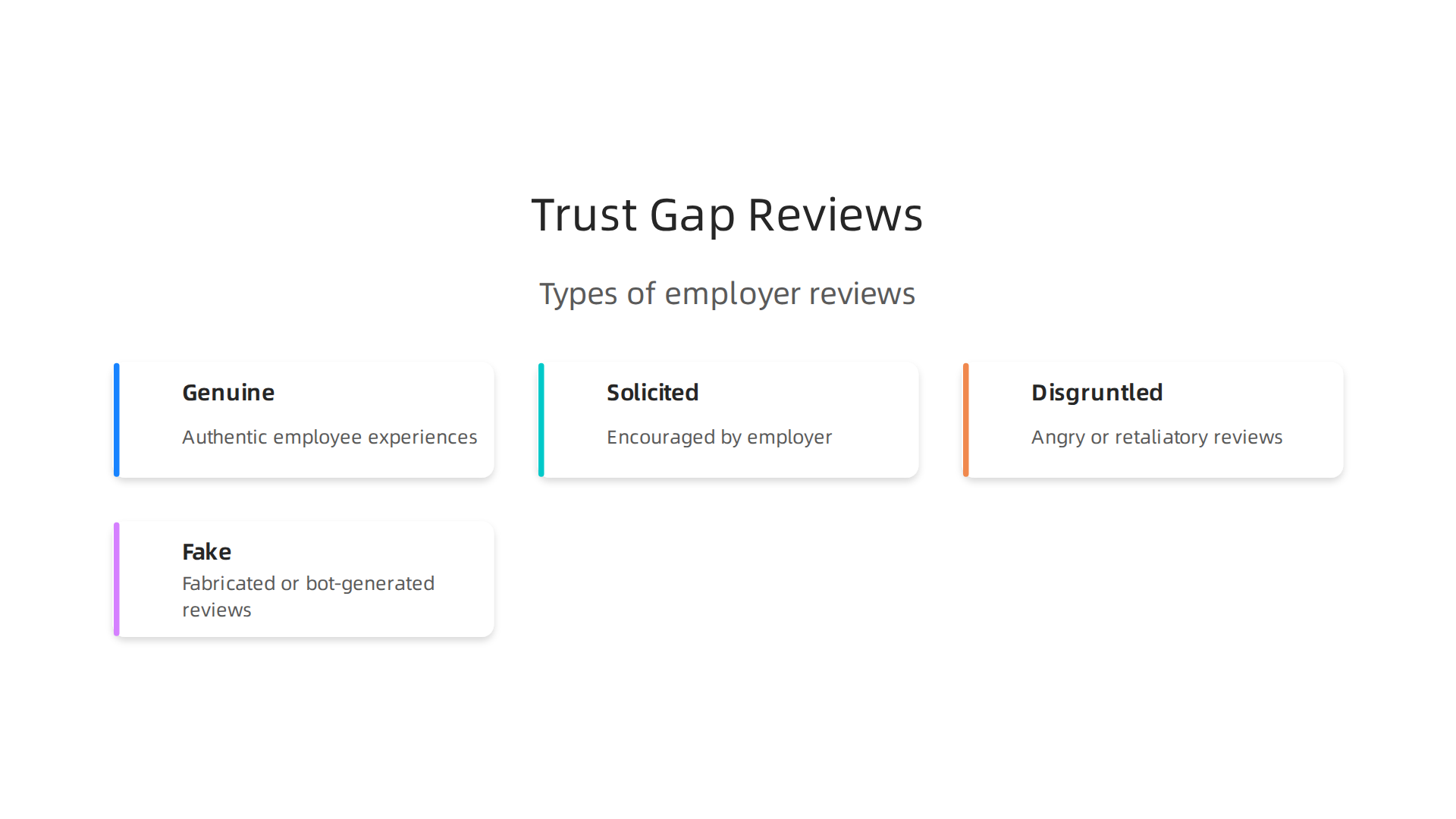
Some are written by happy employees who were asked to post a five star rating. Others come from angry former workers who got fired and want to vent. And some reviews are completely fake, planted by the company or a competitor. This makes it hard to trust what you read.
For sales job seekers, the stakes are even higher. Sales roles often come with tricky commission structures, a high pressure culture, and fast turnover. One fake Glassdoor review can make a bad job look amazing, or a decent one look terrible. If you base your decision on unreliable feedback, you could end up wasting time, money, and energy on a role that does not fit.
That is why learning to find an authentic glassdoor review matters so much. In this article, we will show you how to spot the real employee experiences from the noise. You will discover practical ways to judge glassdoor veracity, compare reviews across multiple sources like the best job search sites reddit recommends, and use that information to protect your career. Whether you are searching for glassdoor jobs or just want to avoid a bad fit, knowing how to read between the lines will save you headaches later.
Ready to become a smarter job seeker? Let’s start by looking at the biggest warning signs of a fake review. For more help building your sales career, check out our guide on land sales jobs in 2026 with a curated job lot method.
Why Glassdoor Reviews Are Critical for Sales Rep Job Seekers
You already know that some Glassdoor reviews can be misleading. But here is the truth: even with a few bad apples, authentic Glassdoor reviews are still one of the most powerful tools you have as a sales professional. Why? Because a job description will never tell you the whole story about commission structures, team culture, or how brutal the quota pressure really is.
For sales roles, the stakes are high. Your income depends on how well the commission plan is designed. Your mental health depends on whether the team culture supports you or burns you out. Your career growth depends on whether the company actually promotes from within. Those details rarely appear in the job posting. They live inside review sites like Glassdoor.
Research shows that strong Glassdoor ratings directly affect how many people apply. Job seekers pay attention. When a company has a high overall score, the application rate goes up. When the score dips, candidates walk away. That means reviews are not just noise. They shape real hiring decisions. And for you, the sales rep, that signal is critical.
Sales professionals often use reviews to compare commission plans and advancement potential. You want to know if the top performers actually hit their numbers or if the quotas are impossible. You want to know if the company honors its promises or changes the rules mid year. Authentic Glassdoor reviews give you that insight better than any other source.
Right now in 2026, employee confidence has started soft, according to the Glassdoor Employee Confidence Index. That means workers are feeling cautious about the job market. So you need to be extra careful. Reading between the lines of reviews helps you avoid a role that could make your career stall.
Of course, you still need to judge the veracity of what you read. But do not let the risk of a few fake reviews stop you from using Glassdoor at all. Used wisely, Glassdoor reviews are your best window into the real life of a sales rep at any company.

Want to see how much a real sales role actually pays and how the team culture feels? Check out our guide on retail sales jobs: your guide to roles, pay, and advancement to compare what you learn from reviews with actual job details.
Red Flags: How to Detect Fake or Manipulated Glassdoor Reviews
Okay, so you know authentic Glassdoor reviews are gold for sales job seekers. But here is the hard truth: not every review you see is real. Some companies try to game the system. They post fake five star reviews to look better. Others attack competitors with fake one star reviews. The FTC has even started cracking down on this, warning companies about possible violations of the new Consumer Review Rule.
That rule makes buying or selling fake reviews illegal, with fines up to $50,000 per violation.
But until every fake review is gone, you need to be your own detective. Here are the biggest red flags to watch for when you judge the veracity of any Glassdoor review.
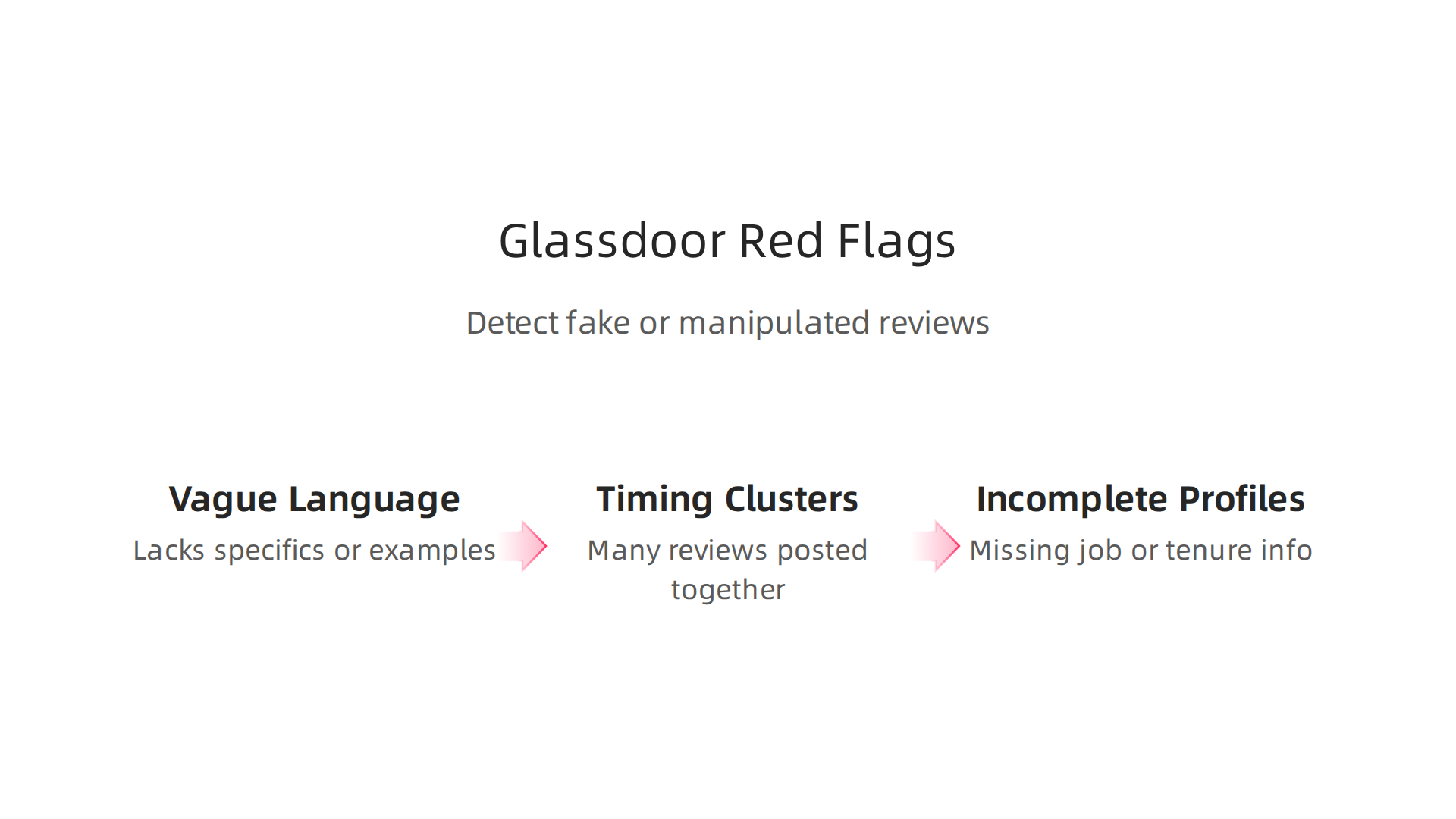
Watch the language
Real reviews from sales reps get specific. They talk about quota attainment, commission structures, territory assignments, and management support. Fake reviews use vague, overly positive language like "great culture" or "amazing team" without any details. If you see the same phrases repeated across multiple reviews, that is a huge warning sign. For example, if three different reviews all say "the team is like family" and nothing about actual sales performance, something is off.
Look for timing clusters
A sudden burst of five star reviews within a few days is suspect. Real reviews trickle in over time. If a company posts ten glowing reviews all within a single week, they are probably trying to boost their score before a recruiting push. Glassdoor uses algorithms and human moderation to detect this kind of fraud, but it still slips through sometimes.
Check the reviewer’s profile
Take a second to click on the reviewer’s name. Do they have other reviews? A real employee often has a history of reviewing multiple employers. If this is their only review ever, and it is a five star rave, be skeptical. Also look at the reviewer’s job title. If someone claims to be a sales rep but never mentions quotas, commissions, or targets, they may not be real.
Use the FTC and Glassdoor’s own tools
Because of the FTC’s 2026 fake review crackdown, Glassdoor has strengthened its verification process. They now ask for identity verification through a work email or other methods. Reviews with a "verified employee" badge are more reliable. But even without that badge, you can still assess credibility using the tips above.
The bottom line? You can still trust authentic Glassdoor reviews if you know what to look for. Skip the generic praise. Hunt for specific sales metrics. And when in doubt, cross reference what you read with the company’s actual job posts. That is how you separate real insight from marketing fluff.
Ready to put your detective skills to work? Start your search with confidence by checking out our guide on how to land sales jobs in 2026 with a curated job lot method.
How Glassdoor’s Review Verification System Works (and Where It Falls Short)
Now that you know what red flags to look for, it helps to understand the system behind the curtain. Glassdoor does not just publish every review that comes in. They have a process. But that process has holes. Knowing how it works helps you judge the glassdoor veracity of any review you read.
How Glassdoor filters reviews
When someone submits a review, Glassdoor uses a mix of tech and human eyes.
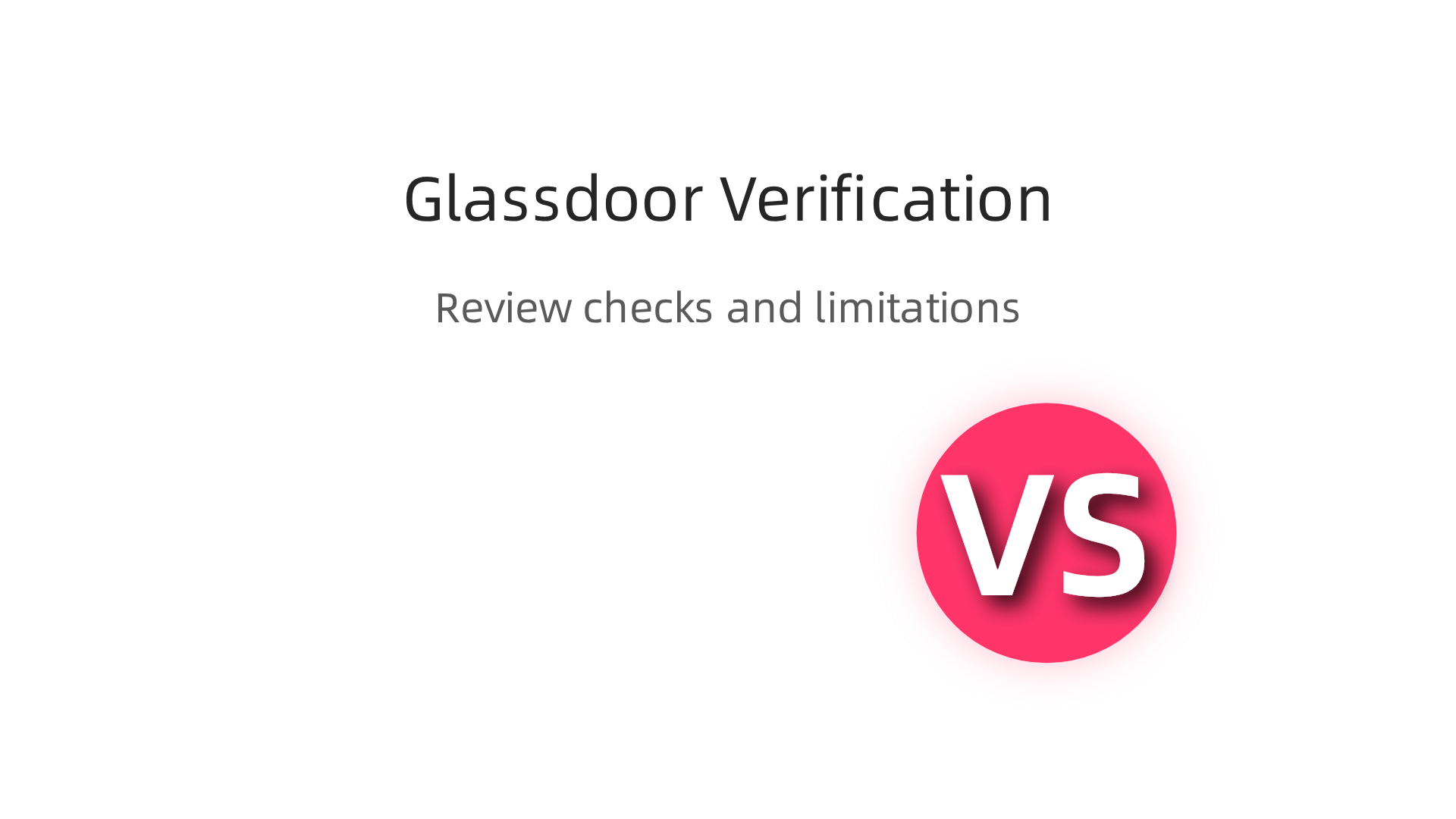
According to their own documentation, they run reviews through technology filters and algorithms first. These look for suspicious patterns like multiple reviews from the same IP address or copied text. Then, human moderators review flagged content. They check if the review follows Glassdoor’s content guidelines. Reviews that violate rules get removed. The system also relies on a community verification process that asks users to confirm their identity before they get full access. This makes it harder for someone to post fake reviews without leaving a trail.
Where the system falls short
Here is the problem. Glassdoor gets millions of reviews. No system catches everything. The biggest weakness? They cannot fully verify that a reviewer actually worked at the company. A verified employee badge is better than nothing, but it only means the reviewer used a work email to claim a profile. That email could be from any job, not necessarily the one they are reviewing. Also, Glassdoor relies heavily on user reporting. If no one flags a fake review, it stays up. And with the rise of AI generated content, fake reviews now look more realistic than ever. Detection tools struggle to keep up.
What changed in 2026
Things are getting better. The FTC’s 2026 fake review crackdown put real pressure on platforms. The new Consumer Review Rule makes buying or selling fake reviews illegal with fines up to $50,000 per violation. In December 2025, the FTC warned 10 companies about possible violations. Glassdoor has responded by strengthening its verification process and investing in better AI detection. But the fight against fake reviews is ongoing.
The bottom line? The system is a helpful filter, not a perfect one. You still need your own detective skills to find authentic glassdoor insights. Use the verification system as a starting point, not the final word. And when you find a company that looks solid, take the next step. Our guide on how to land sales jobs in 2026 with a curated job lot method can help you turn that research into a real offer.
Reading Between the Lines: Decoding Sales‑Specific Review Content
You have read through the system’s strengths and weaknesses. Now it is time to put your detective skills to work. Sales reviews are different from reviews in other fields. The money, the quotas, and the management style matter more in sales than almost anywhere else. A vague review that says "good culture" tells you almost nothing. You need to dig for the details that separate a real opportunity from a trap.
Start with compensation specifics
Compensation is the number one reason salespeople leave. According to a 2026 study, 89% of salespeople leave their job due to compensation issues. That statistic alone should tell you to pay close attention to what reviewers say about pay.
Look for reviews that break down base salary versus commission. A good review will say something like "base is $40,000 with uncapped commission" or "you can realistically earn $80,000 in your first year if you hit quota." A bad review keeps it vague: "pay is okay" or "commission structure is confusing."
The most useful reviews include numbers. For example, one reviewer at a large waste management company noted that "even if you do hit quota, your commission check amount depends on what gets serviced." That is a red flag worth noting. It tells you that hitting quota is not enough. You also depend on other departments doing their jobs.
When you see a review that lists actual dollar amounts or percentage splits, you are getting closer to an authentic glassdoor insight. Those details are harder to fake because they require real experience with the compensation system.
Quota attainment and management style
Next, look for specific comments about quota attainment. Vague statements like "quota is fair" are not helpful. Instead, look for reviews that mention actual attainment rates. Phrases like "about 60% of reps hit quota" or "the top 20% make all the money" give you real data.
Management style matters just as much. In sales, your direct manager can make or break your experience. Genuine reviews will describe specific behaviors. For example, "My manager holds weekly 1-on-1s and helps me improve my pitch" versus "Management only cares about numbers and never listens to feedback." The second one is common, but the first one shows a real culture of support.
To assess glassdoor veracity, compare management comments across multiple reviews. If five reviews mention the same micromanagement issue, that pattern is likely real. One isolated complaint could be a disgruntled employee.
Using pros/cons lists for work-life balance and advancement
Glassdoor forces reviewers to write at least one pro and one con. That is a goldmine if you use it right. A genuine pro might read: "Flexible schedule allowed me to take calls from home when my kids were sick." A fake or vague pro: "Great work environment." Real cons often sound like: "No clear path to promotion unless you are a top performer for three years." That tells you advancement is slow unless you overachieve. Together, these pros and cons give you a balanced picture.
When you find a company with consistent, specific pros and cons, you have found a source you can trust. Combine that with the salary trends from Glassdoor’s own data, which shows the average sales representative salary in 2026 is $125,882 per year. Use that as a baseline to judge whether the reviews match the numbers.
If you want to take this research and turn it into a real job offer, check out our guide on how to land sales jobs in 2026 with a curated job lot method. It walks you through finding roles that match the reviews you have vetted.
You might also browse the best job search sites Reddit communities recommend for cross-referencing. But for now, keep your focus on reading every review like a pro. The details are there. You just have to look for them.
Cross‑Referencing Reviews: Building a Complete Picture of a Sales Team
You have learned how to spot the meaningful details inside a single review. But one review is just one person’s viewpoint. To really know if a sales team is right for you, you need to check multiple sources. Think of it like building a puzzle. Each review site gives you one piece. When you put them together, you see the full picture.
Start with a few trusted platforms
Glassdoor is a great starting point, but it is not the only place to look. The best job search sites Reddit communities often recommend include Blind, Comparably, LinkedIn Company Pages, and Indeed Company Pages.

A study from Team Blind lists these as the top company review sites for 2025 and beyond, with Blind leading for anonymous, verified employee discussions. Comparably is another strong option. It focuses on culture scores and compensation data.
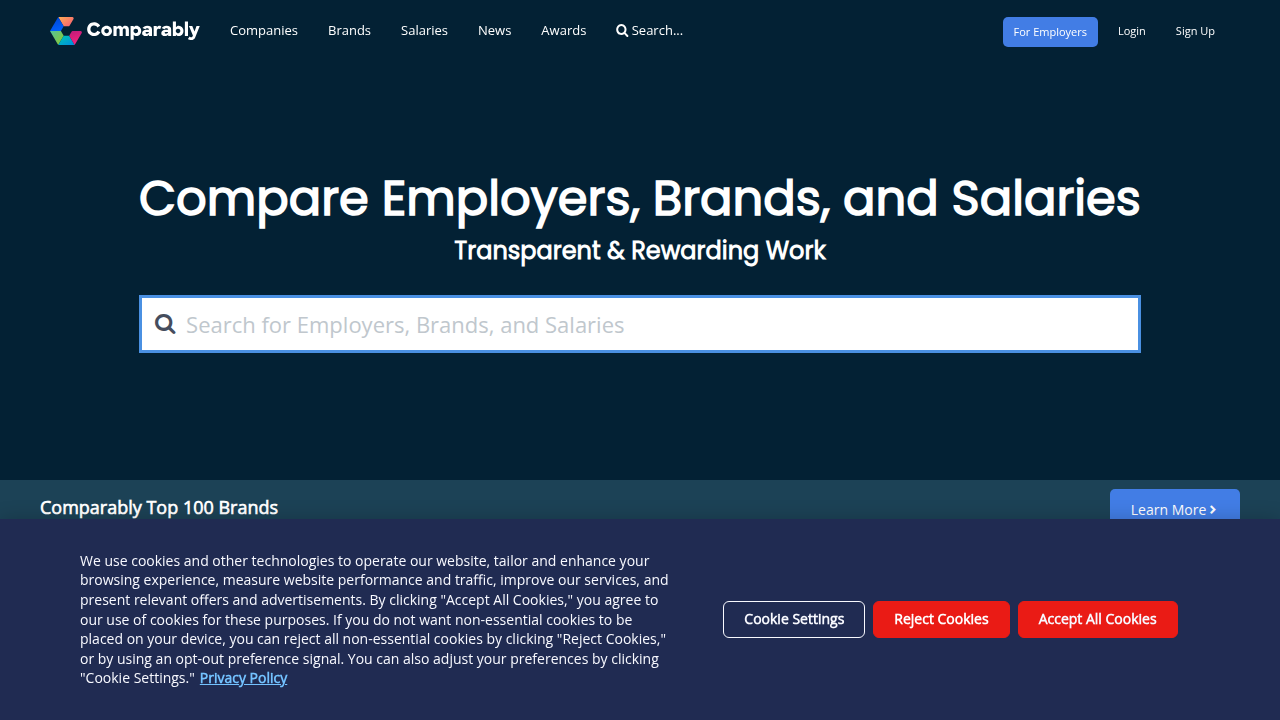
The platform is often called a modern alternative to Glassdoor, and it lets you compare companies side by side.
LinkedIn company reviews are less anonymous but often more detailed. They come from people who use their real names, which can add a layer of authenticity. You can also see which of your connections work there and ask them directly.
Use each platform for a different angle
Blind is best for raw, unfiltered talk. Employees debate everything from quota attainment to management style. If you see the same complaint repeated on Blind, it is likely real. Comparably gives you structured data like CEO approval ratings and salary averages. LinkedIn shows you the professional side. Employees often share career growth stories and team culture.
The 12 best company review sites list from Remote Week also includes Levels.fyi for salary transparency and Vault for company rankings. Use these to check compensation claims you saw on Glassdoor.
Conduct informational interviews to confirm
Reading reviews is a good start. Talking to real people is better. Reach out to current or former employees on LinkedIn. Ask specific questions like: "I read on Glassdoor that quota attainment runs around 60%. Is that accurate based on your experience?" Most people are open to a quick chat, especially if you are respectful of their time.
This step helps you separate noise from truth. A single angry review might exaggerate. But if three former employees tell you the same thing in conversation, you can trust it.
Watch for red flags that show up everywhere
The most dangerous problems show up across multiple platforms. If Glassdoor reviews mention micromanagement, Blind discussions complain about the same regional manager, and LinkedIn comments hint at low morale, that is a systemic issue. Do not ignore it.
A good rule of thumb: one platform says it, it could be a fluke. Two platforms say it, pay attention. Three platforms say it, move on to another company.
If you want professional help interpreting all this data and turning it into a real job offer, a careers advisor can guide you through the process. It saves time and helps you avoid bad fits.
Cross-referencing reviews takes effort, but it is worth it. The more eyes you trust, the fewer surprises you face on the job.
Leveraging Authentic Reviews to Ace Your Sales Interview and Negotiate Compensation
You have learned how to cross-reference reviews to find the truth. Now comes the fun part. You can use that knowledge to crush your interview and get paid what you deserve. The same details you spot in authentic Glassdoor reviews can become your secret weapons.
Prepare smart questions that show you did your homework
Sales interviews are full of vague questions. You can flip the script by asking specific ones. If you see comments on the best job search sites Reddit users recommend about hard quotas or long ramp times, bring those up. For example, you might ask: "I noticed some reviews mention that quota attainment sits around 60%. What percentage of your team actually hits quota in a typical month?" This question signals that you have done real research and care about results.
One inside sales review on Glassdoor points out that even when you hit quota, your commission depends on what gets serviced. That is a red flag. Ask about that too. "How does the commission payout process work? Is it tied to service completion or just closed deals?" Their answer will tell you if the reviews are right.
Negotiate your compensation without sounding pushy
Here is the thing. 89% of salespeople leave their jobs because of compensation issues, according to research from Prowi. Do not become a statistic. Use the salary data you find on Glassdoor jobs pages to set a realistic target. In 2026, the average salary for a sales representative in the United States is around $125,882 per year. You can check the latest Glassdoor sales representative salary page for your specific role.
When you get an offer, reference the data calmly. Say something like: "Based on the market data I have reviewed, the typical total compensation for this role in our area falls in this range. Can we discuss how my experience aligns with that?" This is not confrontational. It is professional. You are showing you did the work.
Turn red flags into clear decision criteria
Not every company deserves a yes. Use what you find to decide. If multiple authentic Glassdoor reviews mention the same problem like unpredictable commission or poor training, use that as a hard pass. You can even test the company during the interview. Ask: "I saw a few comments about ramp time being longer than expected. How does your current training program address that?" Their response will confirm or ease your worry.
The Glassdoor Worklife Trends 2026 report talks about a growing gap between what workers and leaders expect. If the reviews feel out of touch with what the hiring manager says, trust the review pattern.
If you want help making sense of everything and negotiating with confidence, a careers advisor can guide you step by step. It saves time and helps you avoid bad fits.
Summary
This article teaches sales job seekers how to separate authentic Glassdoor reviews from fake or misleading ones so you avoid bad hires and negotiate confidently. It explains the common red flags—vague language, timing clusters, single-use profiles—and how Glassdoor’s verification and moderation work and where they fall short. You’ll learn which sales-specific details matter most (base vs. commission, quota attainment, ramp time, management behavior) and how to use pros/cons entries to judge work-life balance and advancement. The guide shows how to cross-reference Glassdoor with sites like Blind, Comparably, LinkedIn and others, when to trust a pattern, and how to turn review intelligence into interview questions and compensation leverage. Follow the checklist in the article and you’ll be better equipped to spot real employee experiences, confirm them via conversations, and make smarter career decisions.