

Introduction
Imagine spending hours each week scrolling through job boards, only to find listings that have nothing to do with sales.

You see roles for truck drivers, nurses, and retail cashiers. But the commission-based B2B sales role you were hoping for? Nowhere to be found.
If this sounds familiar, you are not alone. Many sales job seekers waste precious time on generic job boards that simply do not surface the right opportunities. The problem is not that the jobs are missing. It is that you are looking in the wrong places.
The reality is that not all job search sites are built the same. Some platforms are great for certain industries but terrible for sales. Others have powerful filters that help you find ziprecruiter online jobs with specific commission structures. And platforms like LinkedIn offer a completely different experience when you use linkedin for job search the right way.
In fact, a recent comparison tracked 500 applications across LinkedIn, Indeed, and Glassdoor in 2026. The winning platform got 2.4 times more interviews than the rest. That is a massive difference. And it shows that picking the right site is just as important as having a strong resume.
According to Glassdoor surveys, 86% of job seekers research company reviews and salaries before applying. But even that habit only helps if you are looking on the right platform in the first place. Many sales positions, especially commission-based or remote ones, are not posted equally across all boards.
That is why we put together this guide. We reviewed the top general job search sites through a sales lens. We looked at how each platform handles commission-based roles, remote sales positions, and industry-specific filters. And we gathered actionable strategies to help you run a smarter job search on linkedin and beyond.
For example, if you are trying to land a sales role on Indeed, knowing the right search filters and keywords can make all the difference. We have a guide on how to find sales jobs on Indeed with a proven framework that covers exactly which settings to use.
Whether you are new to sales or a seasoned rep looking for your next move, this guide will save you time and help you land better offers.
The Changing Landscape of Online Job Search for Sales Roles in 2026
The way you search for sales jobs has changed a lot in 2026. The biggest reason is remote work. You are no longer stuck looking at companies in your city. Now you can use job search sites to find great roles anywhere in the country.
For example, ziprecruiter online jobs and LinkedIn are full of remote sales positions. One report found that about 45 percent of sales roles today are fully remote, especially in tech and SaaS. This opens up many more doors for you. But it also means more competition from candidates all over the place.
Job search sites have also gotten smarter. They use AI to match your skills to open jobs. This helps you find the right roles faster. Sites like LinkedIn now let you take skill assessments. Passing these can push your application ahead of others.
A recent test of 500 applications across LinkedIn, Indeed, and Glassdoor found that one platform got 2.4 times more interviews than the rest. That shows that picking the right site is just as important as having a strong resume.
Here is the thing. Every site works a little differently. To get the best results from your job search on linkedin, you need to understand how LinkedIn works. For example, turning on the "Open to Work" feature makes you show up more in recruiter searches. This is a simple step that can boost your visibility.
Smart job seekers also do research before applying. Surveys show that 86 percent of people look up company reviews and salaries first. This helps you avoid bad fits and find the best opportunities.
But no single site is perfect for everything. You need a plan for each platform. Finding a high-paying sales role on Indeed requires specific filters and keywords. We wrote a complete guide on how to find sales jobs on Indeed with a proven framework. It shows you exactly what to do to get better results.
The landscape of online job search in 2026 gives you more power than ever. But it takes strategy to cut through the noise. You need to use the right sites in the right way. Want to learn more about the best platforms for salespeople? We have built a library of resources to help you master the market.
Top General Job Search Sites That Work for Sales Professionals
With so many job search sites out there, it is easy to feel overwhelmed. You want to focus your energy where it will pay off the most. The truth is, no single platform is perfect for every type of sales role. Your best bet is to pick two or three sites that match your specific needs and master them.
Here is a quick breakdown of the top general job search sites that actually work for sales professionals in 2026.
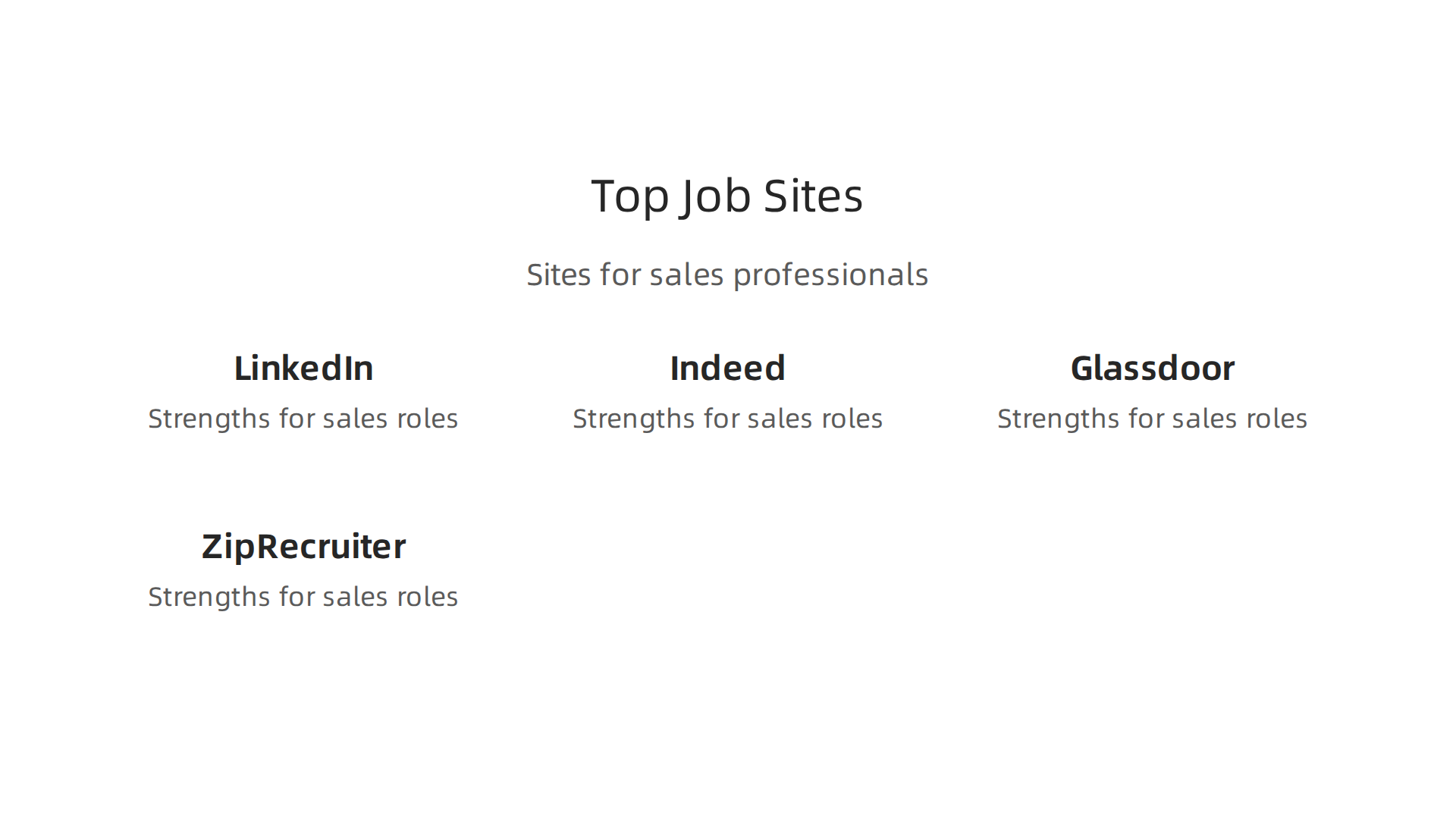
| Platform | Best For | Why It Works |
|---|---|---|
| B2B sales, SaaS, enterprise roles | Top recruiters hunt here daily | |
| Indeed | High-volume searches, salary data | Largest database, strong filters |
| Glassdoor | Compensation research, culture fit | Unmatched salary and review insights |
| ZipRecruiter | Entry-level, commission roles | Fast apply, AI matching for candidates |
| CareerBuilder | Niche and entry-level gigs | Good for specific industries and contract work |
Let me walk you through each one so you can decide where to spend your time.
LinkedIn: The King of B2B Sales Jobs
LinkedIn remains the number one platform for linkedin for job search in 2026, especially if you work in B2B sales.
Recruiters actively search for candidates there. You need a strong profile that highlights your sales numbers, quotas hit, and client wins.
Make sure your headline includes keywords like "Sales Representative" or "Account Executive." Use the "Open to Work" setting to appear in recruiter searches. And do not forget to connect with people in your target companies. A personal connection can get your resume seen faster than any application.
To get the most out of your job search on linkedin, focus on building your network before you need it. Share content about your sales wins or industry insights. This builds credibility and makes recruiters come to you.
Indeed and Glassdoor: Power in Numbers
Indeed is still the biggest job board by volume. You can find thousands of sales roles there.
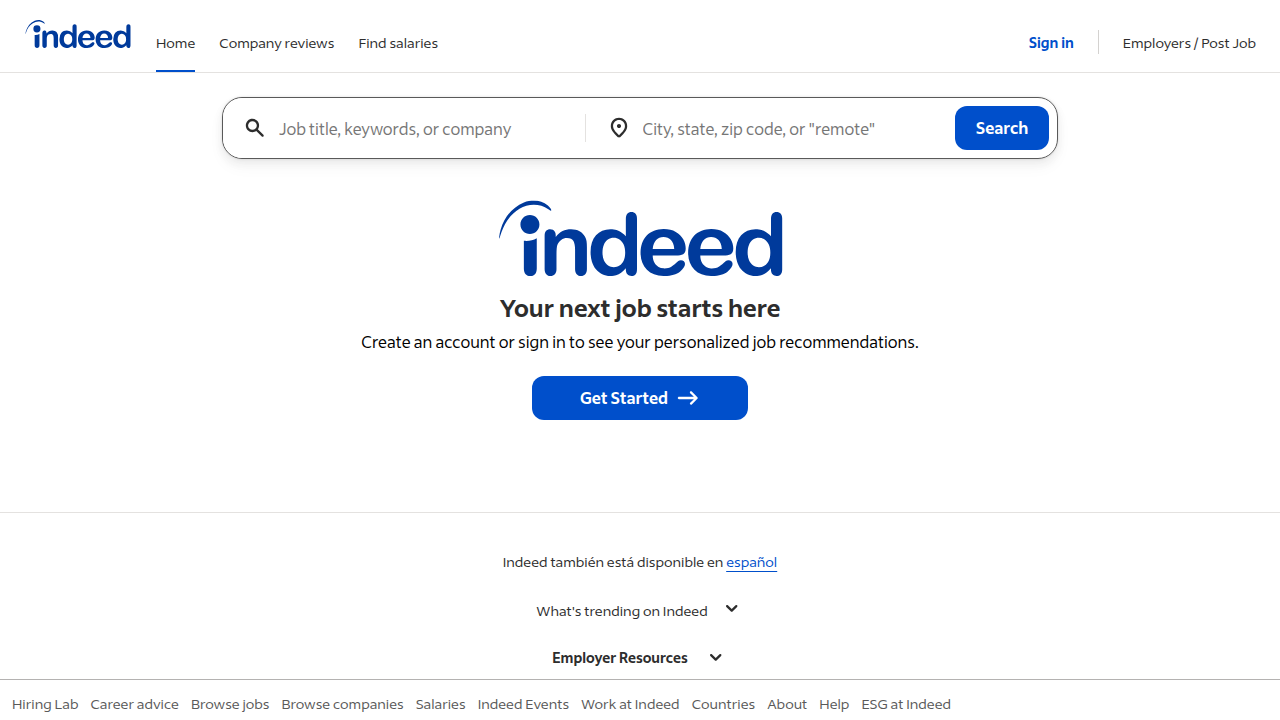
The key is to use the right filters. Narrow by remote work, salary range, and job type. Many sales positions on Indeed include base salary plus commission details, which helps you compare offers quickly.
Glassdoor is a must for research before you apply. You can see salary estimates, company reviews, and interview questions. A quick check on Glassdoor can save you from a bad culture fit. For example, hundreds of sales marketing jobs are listed in Houston alone, with user-submitted salary data that helps you know what to expect.
The two platforms are now closely linked. Many employers post on both. Use Indeed for volume and Glassdoor for vetting.
ZipRecruiter and CareerBuilder: Hidden Gems for Specific Roles
ZipRecruiter is great for sales professionals looking for entry-level or commission-heavy roles. Its AI matching is actually useful.

You upload a resume and it sends you jobs. The "ziprecruiter online jobs" feature works well for remote positions because the site pulls listings from many smaller company pages.
CareerBuilder is often overlooked in 2026, but it can still work for specific niches. It is useful for contract and commission-only sales roles. Some companies in industrial or manufacturing sales still post there. It is also worth checking if you are open to entry-level roles where you earn purely on commission.
One thing to know: CareerBuilder and Monster both filed for Chapter 11 bankruptcy in June 2025. The platforms still exist, but their user base has shrunk. If you use them, treat them as secondary options.
How to Choose the Right Site for You
Your choice of job search sites should match your target role. If you go after enterprise SaaS sales, LinkedIn is your main hub. If you want to blast out many applications quickly, Indeed is the best. If you care about company culture and fair pay, start with Glassdoor.
You can also use multiple sites together. Search on Indeed, research on Glassdoor, and network on LinkedIn. This covers all your bases.
Do not forget that each site has its own algorithm. You can improve your match rate by customizing your resume for each platform. Need help with Indeed? We put together a complete guide on how to find sales jobs on Indeed with a proven framework. It shows you how to use filters and set up job alerts to save time.
And if you want to avoid fake reviews and misleading company feedback, check out our guide on how to spot fake Glassdoor reviews. It will help you trust the data you see.
Final Tip for 2026
The job market moves fast. Application volumes on some boards have dropped up to 50% since February 2026, according to the Job Board Doctor. That means less competition for you if you know where to look.
But you still need a strategy. Pick two platforms. Tailor your profile. Apply consistently. That is the formula that works.
Want to see more expert advice on landing the right sales role? Check out our full library of guides and training resources.
How to Use Job Search Sites to Understand Sales Compensation
Now that you know which job search sites work best for sales roles, let us talk about something just as important: understanding the pay. A job posting might say "base salary plus commission." But what does that actually mean for your wallet? The good news is that sites like Glassdoor and Indeed can help you decode sales compensation before you ever apply.
Why Glassdoor and Indeed Are Your Best Friends for Pay Data
Glassdoor is the go-to place for salary research. It pulls together pay estimates based on thousands of user submissions. For example, the typical sales compensation range across many roles falls between $94,000 and $157,000 per year, according to Glassdoor’s aggregated data. That range includes base pay and commissions.
But you have to read the numbers carefully. A pay range like $83,000 to $127,000 for a Sales Compensation Analyst means the low end might be someone new to the field, while the high end could be a senior rep with a strong commission history. Always check the number of submissions. A range based on just a few people is less reliable than one with hundreds. A critical review of compensation data from sources like Glassdoor and Indeed reminds us that the quality of the data depends on how many people share their pay.
Indeed also shows salary info right on the job listing. Many postings now include total compensation breakdowns, often labeled as base + OTE (on-target earnings). OTE is the amount you can expect if you hit your sales quotas. But be careful: OTE is not guaranteed. It is a target. If the company sets unrealistic quotas, you might earn far less.
For example, Indeed Sales Strategist roles report a typical pay range between $113,079 (25th percentile) and $206,600 (75th percentile) annually. That is a big spread. The difference likely comes from how much commission each person actually earned.
Know Your Niche to Evaluate Offers
Sales compensation looks different depending on your industry. A SaaS sales job might offer a 50/50 split between base and commission. A medical device role might lean heavier on base pay with smaller bonuses. Entry-level positions often have lower base pay but higher commission potential.
When you see a listing, use Glassdoor and Indeed to cross-check. Look up the company by name and see what current and former employees say about pay. For instance, Indeed employees themselves rate their compensation and benefits at 4.2 out of 5 stars, based on over 70 reviews. That tells you the company pays fairly.
Also check job boards for similar titles in your area. Indeed lists hundreds of sales compensation analyst jobs in remote locations, so you can compare offers.
How to Put It All Together
Start by searching for your target job title on Glassdoor. Look at the total pay range. Then check Indeed for current openings that list OTE. Compare the numbers. If a job says $80,000 base plus $40,000 OTE, that is a $120,000 total package. But ask yourself: How realistic is hitting that OTE? Read company reviews to see if reps actually earn their bonuses.
If you want more help understanding what a specific offer is worth, a careers advisor can guide you through commission structures and salary negotiation. Our guide on how a careers advisor helps you land sales jobs faster walks through this exact process.
Final Thought for 2026
The job market changes fast, but the way to understand pay stays the same. Use Glassdoor and Indeed together. Check the data sources. Ask about quotas and commission caps in interviews. The more you know about compensation before you apply, the better offers you will accept.
Ready to explore more expert advice? Browse our full library of guides and resources to build your sales career with confidence.
Finding Remote Sales Jobs on General Platforms: Tips and Tricks
You already know how to decode pay on Glassdoor and Indeed. But what if you specifically want a remote sales job? General job search sites like LinkedIn, Indeed, ZipRecruiter, and Monster can help. You just need to use them the right way.
Remote Filters Exist but Watch Out
Most general platforms now have a "remote" or "telecommute" filter. That sounds great. But here is the catch: not every site labels remote jobs the same way. Some call them "remote," others use "work from home," "virtual," or "fully remote." According to recent data, approximately 45% of sales roles are fully remote, especially in SaaS and tech. However, across all industries, only about 4% of new job postings in early 2026 were fully remote, while 19% were hybrid. So remote sales jobs are out there, but you have to search smart.
On some sites, the remote filter is reliable. On others, it shows a mix of hybrid and remote roles. Always read the job description carefully. A job that says "remote" might actually require occasional travel or a weekly office visit.
Use the Right Keywords to Find Hidden Gems
The default search on ZipRecruiter online jobs or LinkedIn for job search might not show you every remote sales role. That is why you need sales-specific keywords.
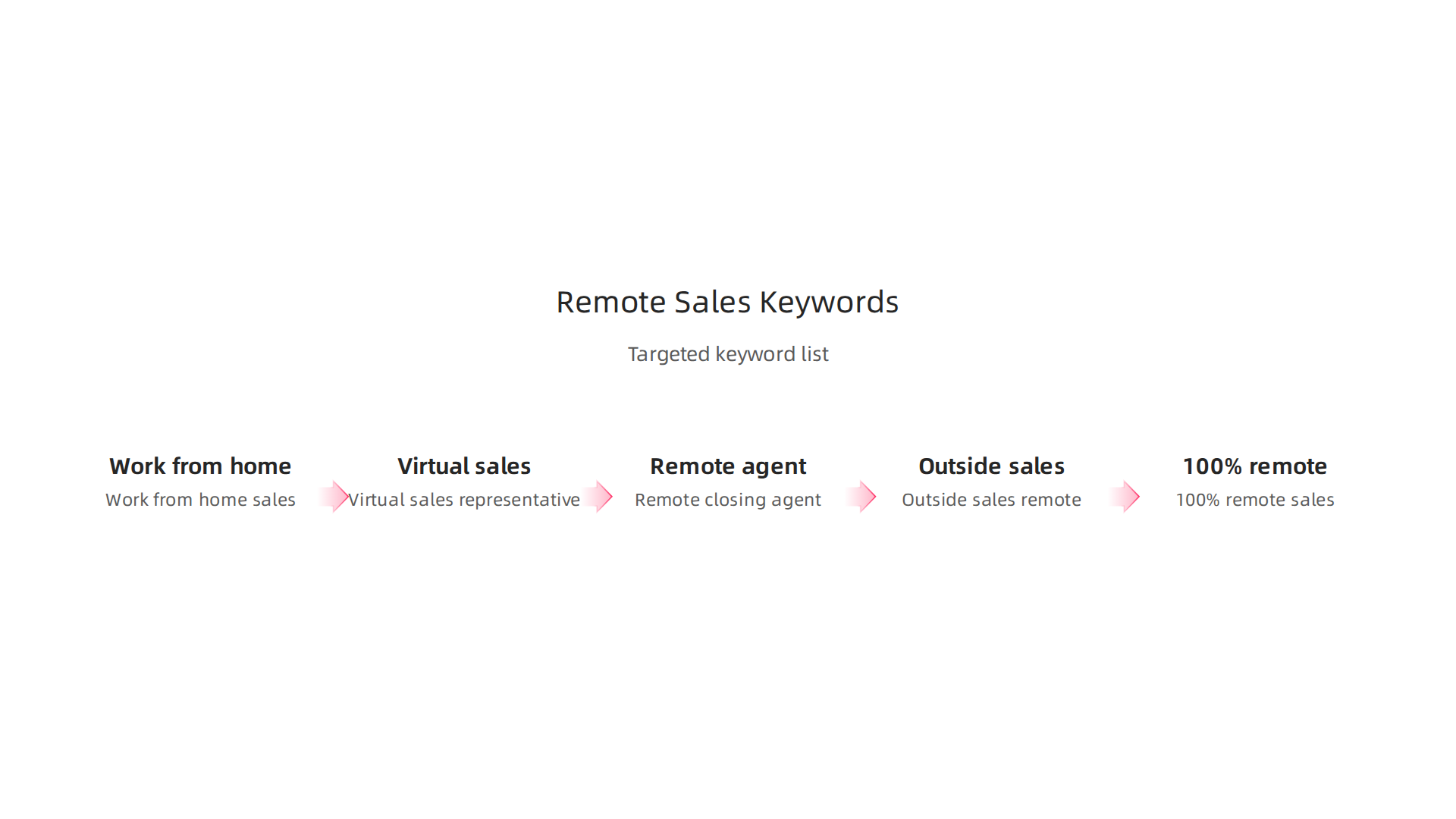
Try these:
- "Work from home sales"
- "Virtual sales representative"
- "Remote closing agent"
- "Outside sales remote"
- "100% remote sales"
These terms can pull up listings that the site’s algorithm might otherwise miss. A job posted as "Virtual Account Executive" may not appear under "Sales Representative" unless you search for it.
Set Up Your Profile for Remote Roles
When you apply through LinkedIn for job search, employers see your profile first. For remote sales jobs, they look for self-motivation. They want to know you can work without someone watching over your shoulder. Update your headline to say "Remote Sales Professional" or "Virtual Account Executive." In your summary, mention that you thrive in a remote environment and have experience managing your own schedule.
Also, turn on the "Open to Work" setting and select "Remote" as your preferred location. That way recruiters searching for remote talent will find you faster.
Put It All Together
General job search sites work best when you combine filters, keywords, and a strong profile. Start with Indeed or LinkedIn. Use the remote filter. Then run a second search with your custom keywords. Compare results. If you want more targeted guidance, our article on landing legitimate part-time remote sales jobs in 2026 goes deeper into this process.
The market for remote sales is growing, but the competition is real. Use these tips to stand out and find roles that fit your life.
Browse Articles for more strategies to build your sales career
Bridging the Skill Gap: How Job Search Sites Can Help You Identify Needed Skills
You have found some great remote sales listings. But here is a question that stops many job seekers cold. Do you actually have the skills those employers want?
The answer might be hiding right in front of you. The same job search sites you use to find openings can also tell you exactly what skills to build next. You just have to read between the lines.
Job Descriptions Are a Goldmine of Skill Data
Every job posting is basically a wish list from an employer. They tell you exactly what they value. And when you look across many postings, patterns start to appear.
According to data from Indeed, communication skills appear in over 42% of sales job postings. That is the single most requested skill.
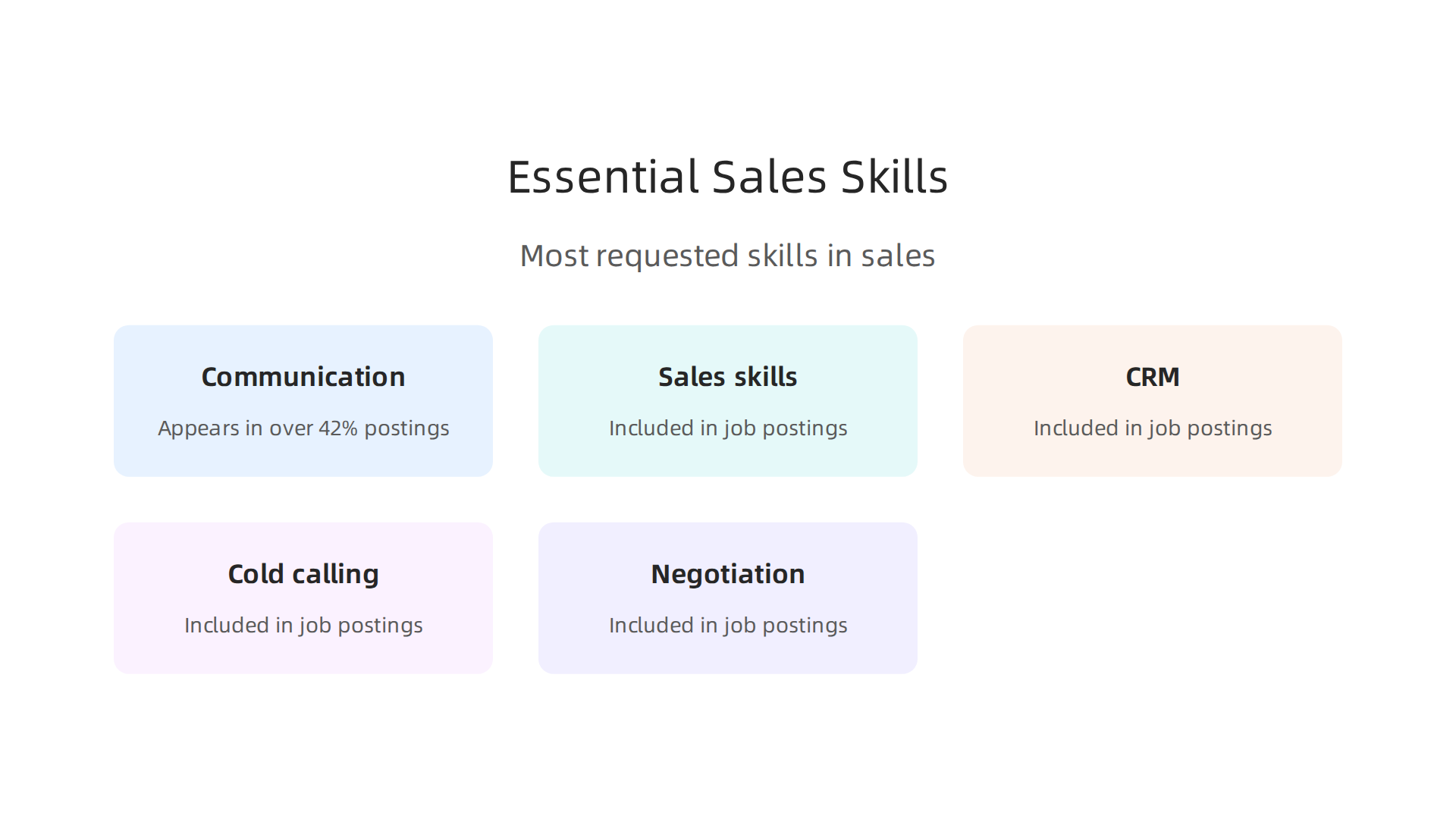
Sales skills themselves appear in about 40% of listings. Other top items include customer relationship management, cold calling, and negotiation.
The experts at FranklinCovey break sales skills into two big groups. Soft skills like listening, empathy, and relationship building. And hard skills like CRM management, prospecting, and product knowledge. Most successful salespeople need both.
When you browse through listings on LinkedIn for job search or ZipRecruiter online jobs, start a list. Write down the skills that keep appearing. If five out of ten postings ask for CRM experience, that is a clear signal. You should learn that tool.
Use Skill Assessments to Prove Yourself
Some job search sites go further. LinkedIn, for example, offers built-in skill assessments. You can test yourself on things like Salesforce, cold calling, or negotiation. If you pass, a badge appears on your profile.
This matters more than you might think. Recruiters often filter candidates by verified skills. A badge can help you rank higher in search results. And it shows employers you are serious about your craft.
Make a Skill Development Plan
After you identify the gaps, take action. If multiple postings ask for experience with a specific CRM, find a free tutorial. If negotiation keeps showing up, watch videos or take a short course.
The goal is simple. Let the market tell you what matters. Then spend your time building exactly those skills. That way you are not guessing. You are preparing for real opportunities.
For more practical guidance on turning these insights into actual job offers, check out our complete guide on landing part time remote sales roles. And when you are ready to explore more strategies, take a look at the resources on our blog for interview tips and career growth advice.
Mapping Your Sales Career Path Using Job Search Site Insights
You have figured out what skills to build. Now comes the next big question. Where do those skills actually take you over time?
Job search sites are great for finding your next role. But they can also help you plan your entire sales career. You just need to look a little deeper.
Spot the Career Ladder in Listings
Sales careers follow a pretty clear path. Most people start as a Sales Development Representative (SDR) or Business Development Representative (BDR). Then they move to Account Executive (AE). After that, they can step up to Sales Manager.
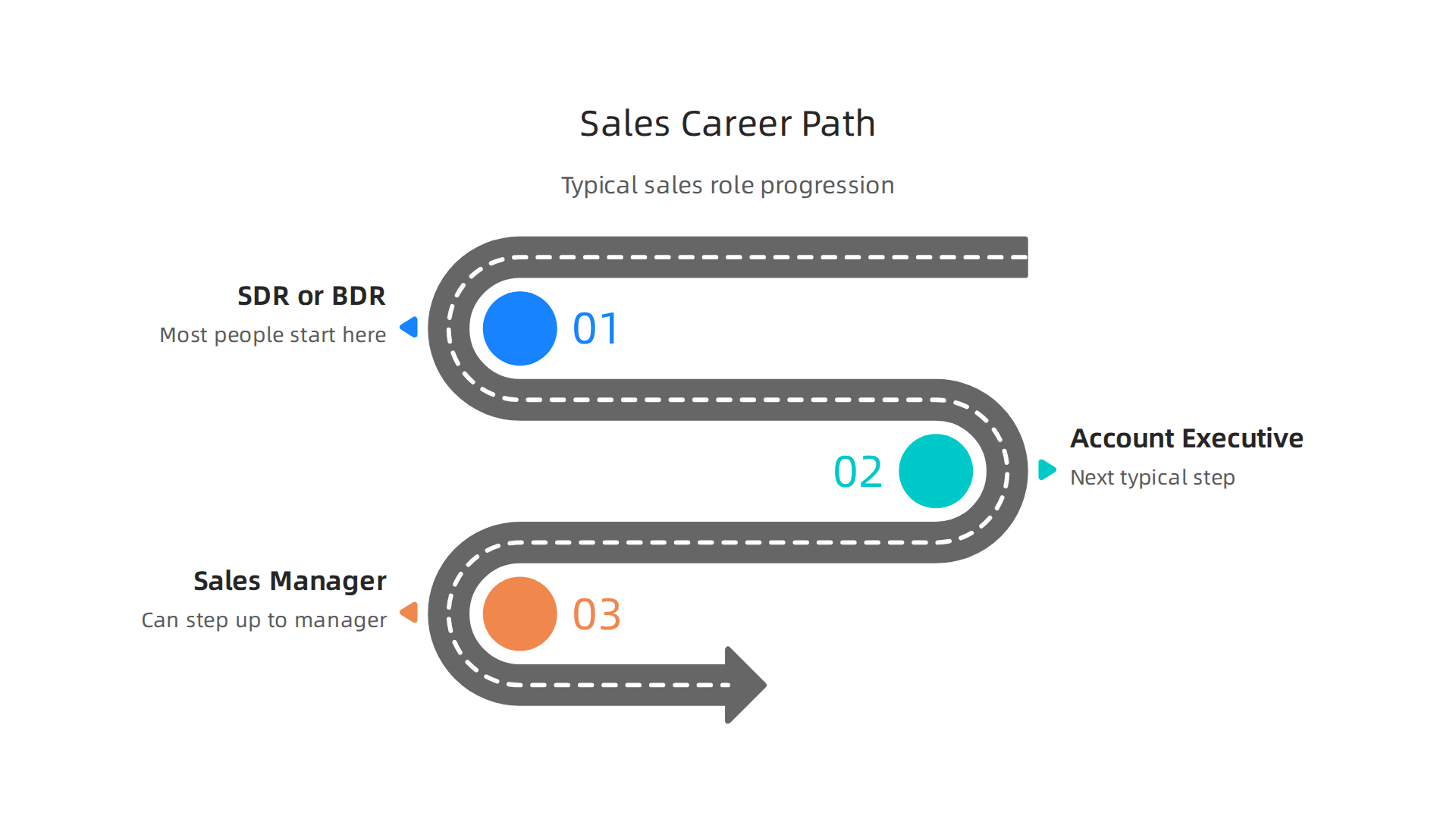
You can see this progression when you search on platforms like LinkedIn for job search or ZipRecruiter online jobs. Look at the requirements for each title. SDR roles ask for strong communication and basic prospecting. AE roles add negotiation and closing skills. Manager roles require leadership and coaching ability.
According to FranklinCovey, effective communication is the foundation of every sale. But as you climb, you need more advanced skills. Highspot points out that top performers use stakeholder alignment and influence mapping.
Use Company Reviews for Real Career Insights
Sites like Glassdoor and LinkedIn let you read reviews from real employees. You can find out how long people stay in each role before getting promoted. You can see which companies actually invest in training.
For a deeper look at finding honest feedback, check out our guide on how to spot fake Glassdoor reviews and find authentic feedback for sales jobs.
Salary Trends Guide Your Negotiations
Every job site shows salary ranges for each role at each level. Entry level sales roles typically pay less but offer high commission potential. Mid level roles provide a solid base salary. Senior roles often include bonuses and equity.
Randstad notes that trending sales skills in 2026 include merchandising, selling techniques, and product knowledge. Knowing which skills command higher pay helps you decide what to learn next.
Build Your Roadmap in 30 Minutes
Here is the simple plan. Spend half an hour on your favorite job search sites. Search for each sales title that interests you. Write down the skills, experience, and salary for each level. Now you have a clear map of exactly what to learn and when.
The path from SDR to Manager is not a mystery. It is sitting right there in the job listings. You just need to connect the dots.
For more guidance on advancing your sales career, browse our expert articles and interview tips. And when you are ready for personalized help, contact us directly.
Summary
This guide helps sales professionals run a smarter job search in 2026 by showing which general job sites actually surface quality sales roles and how to use each platform effectively. It reviews the strengths of LinkedIn, Indeed, Glassdoor, ZipRecruiter and CareerBuilder for B2B, entry-level and commission-heavy roles, and explains practical tactics for finding remote positions, using filters and sales-specific keywords, and turning listings into a skills development plan. You’ll also learn how to decode compensation (base vs OTE), verify employer reviews, and map the common career ladder from SDR to manager using live job data. The article combines platform-specific tips—like turning on LinkedIn’s Open to Work and setting up Indeed alerts—with research habits that reduce wasted applications. After reading, you’ll know which two sites to focus on, how to tailor your profile and resume per board, and how to evaluate offers and spot red flags before you apply.